Emilia-Romagna Wine Guide: Lambrusco, Sangiovese, Albana and More
Sparkling Lambrusco from Modena and Reggio Emilia, Sangiovese and Albana from Romagna, and the wines of Bologna and Piacenza
Emilia-Romagna wine means sparkling red Lambrusco from Emilia and Sangiovese and Albana from Romagna, made to go with Italy's richest food. Discover its wines and what to try first.
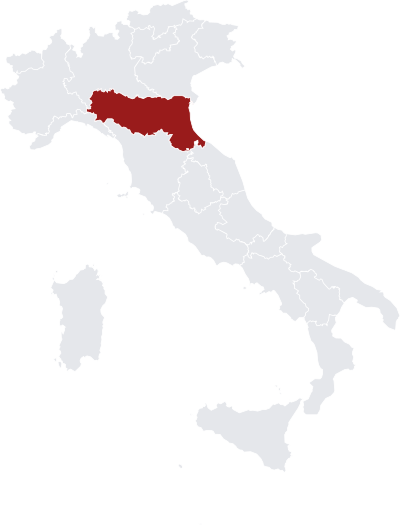
Emilia-Romagna stretches across northern Italy from Piacenza to the Adriatic coast at Rimini. It is really two regions with different wine traditions. Emilia, in the west, around Piacenza, Parma, Reggio Emilia, Modena and Bologna, is the land of Parmigiano Reggiano, prosciutto di Parma, balsamic vinegar and fresh egg pasta, and its wines are mostly sparkling and dry, made to cut through rich food. Romagna, in the east, around Imola, Faenza, Forlì, Cesena and Rimini, makes still wines from Sangiovese and the white Albana. Most vineyards are on the plain and the lower hills of the Apennines.
Emilia-Romagna Wines at a Glance
| Wine | Style | Main grape | Where | Price |
|---|---|---|---|---|
| Lambrusco di Sorbara | Sparkling, pale red, very dry | Lambrusco di Sorbara | North of Modena | $ |
| Lambrusco Grasparossa di Castelvetro | Sparkling, dark red, tannic | Lambrusco Grasparossa | Hills south of Modena | $ |
| Lambrusco Salamino and Reggiano | Sparkling red, dry to sweet | Lambrusco Salamino, Lambrusco Maestri | Modena, Reggio Emilia | $ |
| Romagna Sangiovese | Medium to full red | Sangiovese | Romagna hills | $–$$ |
| Romagna Albana | Dry, sweet or passito white | Albana | Romagna hills | $–$$ |
| Pignoletto | Dry white, still or sparkling | Pignoletto | Hills of Bologna | $ |
| Gutturnio | Red, still or lightly sparkling | Barbera, Croatina | Colli Piacentini | $ |
| Ortrugo and Malvasia | Dry whites, still or frizzante | Ortrugo, Malvasia di Candia | Colli Piacentini, Parma | $ |
Price guide for typical US retail: $ under $20, $$ $20–40, $$$ over $40.
Lambrusco
Lambrusco is Emilia's most famous wine: a sparkling red, usually dry, with bright acidity, served cool. The sweet, mass-market Lambrusco that was popular in the US in the 1970s and 1980s gave it a poor image, but traditional, dry Lambrusco is a serious and very food-friendly wine. Lambrusco is not one grape but a family of related varieties.
- Lambrusco di Sorbara DOC: the palest and most delicate, with red berries, violets and sharp acidity, often bone dry.
- Lambrusco Grasparossa di Castelvetro DOC: the darkest and most structured, with black cherry, blackberry and firm tannins.
- Lambrusco Salamino di Santa Croce: in between, fruity and deeply coloured, from around Carpi.
- Modena DOC, Colli di Scandiano e di Canossa DOC and Emilia IGT: other Lambrusco from Modena and Reggio Emilia, including the popular Reggiano blends.
Most Lambrusco is made by the tank method. Look also for bottle-fermented (rifermentato in bottiglia or ancestrale) and traditional-method versions from small producers. See our best Lambrusco wines.
Romagna: Sangiovese and Albana
- Romagna DOC Sangiovese: Romagna's main red, from the hills between Imola and Rimini. It is usually rounder and fruitier than Tuscan Sangiovese, with cherry, violets and herbs. The best wines come from named subzones such as Predappio, Bertinoro, Modigliana and Brisighella, and Riserva versions age well.
- Romagna Albana DOCG: in 1987 Albana became Italy's first white DOCG. It is made dry (secco), lightly sweet and as a rich passito from dried grapes, with apricot, honey and almond.
- Colli di Faenza DOC, Colli d'Imola DOC, Colli di Rimini DOC and Colli Romagna Centrale DOC: smaller hill denominations.
- Rubicone IGT: a regional label for Romagna wines.
Bologna and Piacenza
- Pignoletto: the white of the Bologna hills, fresh and lightly aromatic, still, frizzante or fully sparkling. The top wines are Colli Bolognesi DOCG Pignoletto; the wider Pignoletto DOC covers more of the region.
- Colli Piacentini DOC: the hills south of Piacenza, near Lombardy's Oltrepò Pavese. Its best-known red is Gutturnio DOC, a blend of Barbera and Croatina (here called Bonarda). Its whites include Ortrugo dei Colli Piacentini DOC and aromatic Malvasia di Candia, dry, sparkling or sweet. Some producers make skin-contact (orange) whites here, such as La Stoppa.
- Colli di Parma DOC: the hills south of Parma, known for sparkling Malvasia.
Which Emilia-Romagna Wine to Try First
- For a classic Lambrusco: a dry Lambrusco di Sorbara or Lambrusco Grasparossa di Castelvetro.
- For a red that's not sparkling: a Romagna Sangiovese Superiore or Riserva from a named subzone.
- For a white: a Pignoletto or a dry Romagna Albana.
- For something unusual: a skin-contact Malvasia from the Colli Piacentini.
- With dessert: a Romagna Albana Passito.
Producers worth knowing include Paltrinieri, Cantina della Volta, Cleto Chiarli, Medici Ermete, Venturini Baldini, Fattoria Moretto and Cavicchioli for Lambrusco; Fattoria Zerbina, Tre Monti, San Patrignano, Poderi dal Nespoli, Villa Venti and Tenuta La Viola in Romagna; and La Stoppa, Monte delle Vigne and Lusenti around Piacenza and Parma.
Food Pairing with Emilia-Romagna Wines
- Prosciutto di Parma, culatello, mortadella and gnocco fritto: Lambrusco di Sorbara or a Malvasia frizzante.
- Tortellini in brodo, tagliatelle al ragù and lasagne: Lambrusco Grasparossa or Romagna Sangiovese.
- Zampone and cotechino: Lambrusco Grasparossa; its bubbles and tannins cut the fat.
- Parmigiano Reggiano: Lambrusco, or an aged Romagna Sangiovese Riserva with older cheese.
- Piadina and Adriatic fish: Pignoletto, Albana secco or Trebbiano.
- Ciambella and dry pastries: Romagna Albana Passito.
Frequently Asked Questions About Emilia-Romagna Wine
What wine is Emilia-Romagna known for?
Above all for Lambrusco, the sparkling red of Modena and Reggio Emilia. Romagna is known for Sangiovese and for Albana, Italy's first white DOCG. Pignoletto from Bologna and Gutturnio from Piacenza are also local classics.
Is Lambrusco sweet or dry?
It can be either. Traditional Lambrusco is dry (secco); lightly sweet (amabile) and sweet (dolce) versions also exist. Look for "secco" on the label for the classic style.
Should Lambrusco be served cold?
Yes, cool rather than ice-cold, around 10–14 °C, like a sparkling wine. Pale Sorbara can be served a little colder than dark Grasparossa.
How is Romagna Sangiovese different from Tuscan Sangiovese?
It is the same grape, but Romagna Sangiovese is often softer and fruitier, with less tannin, and usually less expensive. The best wines come from subzones such as Predappio, Bertinoro and Modigliana.
What was Italy's first white DOCG?
Albana di Romagna (today Romagna Albana), in 1987.
Explore More
- All Emilia-Romagna wines and wineries, with the full list of producers and denominations
- Best Lambrusco wines
- Best Sangiovese wines
- Best wines for pasta
- Italian wine and food pairing guide
Sources
Production rules and official information from the consortia of the wines in this guide:
- Lambrusco di Sorbara DOC · lambrusco.net
- Lambrusco Grasparossa di Castelvetro DOC · lambrusco.net
- Modena DOC · lambrusco.net
- Colli di Scandiano e di Canossa DOC · lambrusco.net
- Romagna DOC · consorziovinidiromagna.it
- Romagna Albana DOCG · consorziovinidiromagna.it
- Colli di Faenza DOC · consorziovinidiromagna.it
- Colli d'Imola DOC · consorziovinidiromagna.it