Alto Adige and Trentino Wine Guide: Alpine Whites, Reds and Trentodoc
Italy's northernmost wine region: Pinot Grigio, Gewürztraminer and Pinot Bianco, Schiava and Lagrein, Teroldego and the sparkling Trento DOC
Alto Adige and Trentino wine means fresh Alpine whites, Pinot Grigio, Gewürztraminer and Pinot Bianco, light reds from Schiava and Lagrein, and the sparkling Trento DOC. Discover the wines and what to try first.
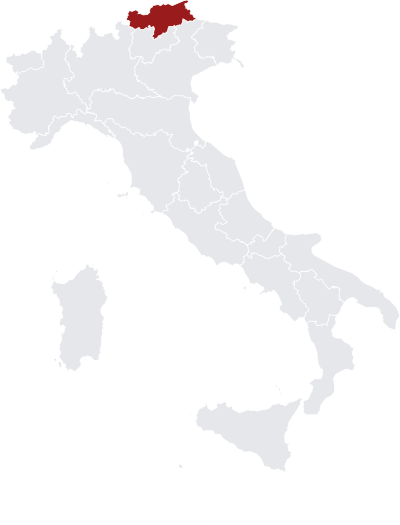
Trentino-Alto Adige is Italy's northernmost wine region, in the valleys of the Adige river and its tributaries, framed by the Dolomites. It is made of two autonomous provinces with different characters. Alto Adige (Südtirol), around Bolzano, was part of Austria until 1919 and is mostly German-speaking; its labels are often in both languages. Trentino, around Trento, is Italian-speaking. Vineyards climb from about 200 m on the valley floors to over 1,000 m, and the big difference between warm days and cold nights gives wines with bright acidity and clear aromas. White wines lead, but the region also has native reds and one of Italy's best sparkling wines.
Wines at a Glance
| Wine | Style | Main grape | Where | Price |
|---|---|---|---|---|
| Alto Adige Pinot Grigio | Dry white, fuller than most | Pinot Grigio | Alto Adige | $–$$ |
| Alto Adige Pinot Bianco | Dry white, age-worthy | Pinot Bianco | Terlano, Oltradige | $–$$ |
| Alto Adige Gewürztraminer | Aromatic white | Gewürztraminer | Tramin (Termeno) | $–$$ |
| Valle Isarco whites | Crisp, mineral whites | Kerner, Sylvaner, Müller-Thurgau, Riesling | Northeast of Bolzano | $–$$ |
| Alto Adige Sauvignon and Chardonnay | Dry whites | Sauvignon Blanc, Chardonnay | Alto Adige | $–$$ |
| Santa Maddalena and Lago di Caldaro | Light red | Schiava | Bolzano, Lake Caldaro | $ |
| Lagrein | Dark, medium to full red | Lagrein | Bolzano | $–$$ |
| Alto Adige Pinot Nero | Light to medium red, elegant | Pinot Nero | Mazzon, Oltradige | $$ |
| Trento DOC | Traditional-method sparkling | Chardonnay, Pinot Nero | Trentino | $$ |
| Teroldego Rotaliano | Dark, juicy red | Teroldego | Campo Rotaliano, Trentino | $–$$ |
| Marzemino | Light, fruity red | Marzemino | Vallagarina, Trentino | $ |
| Vino Santo Trentino | Sweet white | Nosiola | Valle dei Laghi | $$$ |
Price guide for typical US retail: $ under $20, $$ $20–40, $$$ over $40.
Alto Adige: Italy's Alpine White Wine Region
Almost all Alto Adige wine is sold under one denomination, Alto Adige / Südtirol DOC, followed by the grape name and sometimes a subzone such as Valle Isarco (Eisacktal), Terlano (Terlan), Santa Maddalena (St. Magdalener) or Val Venosta (Vinschgau). Much of the wine is made by co-operative wineries (Kellereien), which here are among the best producers in Italy.
- Pinot Grigio: riper and more textured than the light Pinot Grigio of the plains, with pear, apple and spice.
- Pinot Bianco (Weissburgunder): a local speciality. The Pinot Bianco of Terlano is famous for ageing for decades.
- Gewürztraminer: the grape is named after the village of Tramin (Termeno), south of Bolzano. Alto Adige versions are aromatic, with rose, lychee and spice, but usually dry and fresh.
- Valle Isarco: the steep valley northeast of Bolzano, with some of the region's highest vineyards, makes crisp, mineral Kerner, Sylvaner, Müller-Thurgau, Riesling and Grüner Veltliner.
- Sauvignon Blanc and Chardonnay: both are widely grown and can be excellent.
Alto Adige Reds
- Schiava (Vernatsch): the traditional red of Alto Adige: pale, light, fragrant, with red berries and a bitter-almond finish. Look for Santa Maddalena (St. Magdalener) from the slopes above Bolzano and Lago di Caldaro DOC (Kalterersee).
- Lagrein: a native grape from Bolzano, especially the Gries district, with dark colour, plum, blackberry, chocolate and soft tannins; there is also a rosé, Lagrein Kretzer. See our best Lagrein wines.
- Pinot Nero (Blauburgunder): some of Italy's best, especially from Mazzon, above Egna, and the Oltradige.
- Moscato Rosa: a rare, rose-scented sweet red.
Trentino: Trento DOC and Native Reds
- Trento DOC (Trentodoc): traditional-method sparkling wine, mostly from Chardonnay with Pinot Nero, Pinot Bianco and Pinot Meunier, grown in mountain vineyards. It was one of Italy's first DOCs for traditional-method sparkling wine. Giulio Ferrari founded the Ferrari winery in 1902, and Ferrari is still the best-known producer. See our Italian sparkling wine guide.
- Teroldego Rotaliano DOC: dark, juicy reds from the gravel plain of the Campo Rotaliano, north of Trento. Elisabetta Foradori is the grape's best-known producer.
- Marzemino: a light, fruity red from the Vallagarina, south of Trento, famous for being praised in Mozart's opera Don Giovanni.
- Nosiola and Vino Santo Trentino: Nosiola is a native white grape of the Valle dei Laghi, west of Trento. It makes fresh dry whites and the rare Vino Santo Trentino, from grapes dried for months, one of Italy's most concentrated sweet wines.
- Trentino DOC: the regional DOC, for varietal wines such as Pinot Grigio, Chardonnay, Müller-Thurgau and Marzemino.
- Bordeaux-style reds: Tenuta San Leonardo, in the south of Trentino, is known for its Cabernet and Merlot blend.
The Vigneti delle Dolomiti IGT (Weinberg Dolomiten) covers both provinces and part of the Veneto.
Which Wine to Try First
- For everyday drinking: an Alto Adige Pinot Grigio or Pinot Bianco from a good co-operative.
- For an aromatic white: an Alto Adige Gewürztraminer.
- For a crisp, mineral white: a Kerner or Sylvaner from the Valle Isarco.
- For a light red to drink cool: a Santa Maddalena or a Lago di Caldaro.
- For a fuller red: a Lagrein or a Teroldego Rotaliano.
- For a celebration: a Trento DOC Riserva.
- For a rare sweet wine: a Vino Santo Trentino.
Producers worth knowing include the co-operatives Cantina Terlano, Cantina Tramin, Girlan, St. Michael-Eppan, Kellerei Kaltern, Colterenzio, Nals Margreid and Cantina Valle Isarco; the estates Alois Lageder, Elena Walch, Franz Haas, Hofstätter, Manincor, Tiefenbrunner and Abbazia di Novacella in Alto Adige; and Ferrari, Foradori, Tenuta San Leonardo, Pojer e Sandri and La Vis in Trentino.
Food Pairing
- Speck, canederli (bread dumplings) and Alpine cheeses: Schiava, Pinot Bianco or Lagrein.
- Freshwater fish and trout: Müller-Thurgau, Sylvaner or Pinot Bianco.
- Asparagus with sauce bolzanina: Sauvignon Blanc or Pinot Bianco.
- Spicy dishes and Asian food: Gewürztraminer.
- Goulash, venison and roast meats: Lagrein or Teroldego.
- Aperitivo and celebrations: Trento DOC.
- Strudel and dried-fruit desserts: Vino Santo Trentino or Moscato Rosa.
Frequently Asked Questions
What wine is Alto Adige known for?
For fresh, aromatic white wines: Pinot Grigio, Pinot Bianco, Gewürztraminer, Sauvignon and the whites of the Valle Isarco. Its best-known reds are the light Schiava and the darker Lagrein.
What is the difference between Trentino and Alto Adige?
They are the two provinces of one region. Alto Adige, in the north, is mostly German-speaking and focuses on still white wines and Pinot Nero. Trentino, in the south, is Italian-speaking and is best known for the sparkling Trento DOC and the red Teroldego.
What is Trento DOC?
A traditional-method sparkling wine, made like Champagne with a second fermentation in the bottle, mainly from Chardonnay and Pinot Nero grown in the mountains of Trentino.
Is Alto Adige Pinot Grigio better than regular Pinot Grigio?
It is usually fuller and more flavourful, because it comes from hillside vineyards with lower yields. Most inexpensive Pinot Grigio comes from the plains of the Veneto and Friuli.
Why are the labels in German?
Alto Adige (Südtirol) was part of Austria until the end of the First World War, and most of its people speak German. Labels are often in German and Italian.
Explore More
Sources
Production rules and official information from the consortia of the wines in this guide:
- Alto Adige/Sudtirol DOC · altoadigewines.com
- Trento DOC · trentodoc.com
- Teroldego Rotaliano DOC · vinideltrentino.com