Best Liguria Wines
The Italian Riviera in a Glass
The Italian Riviera in a Glass
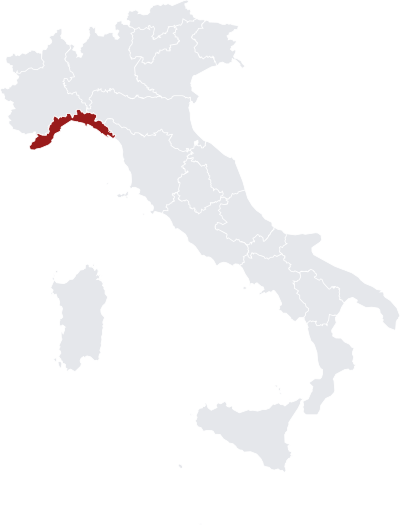
Liguria is one of Italy's smallest wine regions, a narrow crescent of coastline wedged between the Alps, the Apennines, and the Ligurian Sea. The vineyards here cling to terraced cliffs that plunge toward the Mediterranean, worked almost entirely by hand because no machine can navigate the near-vertical slopes. This landscape makes Ligurian wine rare — production volumes are tiny by Italian standards — but it also makes it singular. Wines grown this close to salt air and sea wind develop flavors you will not find anywhere else on the peninsula.
The region stretches from the French border in the west to the Gulf of La Spezia in the east, passing through the celebrated stretch of coastline known as the Cinque Terre. Viticulture here dates back at least to Roman times, and the indigenous grape varieties have adapted over centuries to an environment defined by heat, humidity, and thin soils carved from schist and limestone. Ligurian whites are among Italy's most food-friendly coastal wines, and the reds, though scarce, deliver a refinement that surprises anyone expecting something rough from such a rugged landscape.
If you are approaching Italian regional wine for the first time, Liguria is a compelling entry point. It sidesteps the well-worn tracks of Tuscany and Piedmont and offers something less familiar but immediately appealing — lean, aromatic, and perfectly suited to summer tables near or far from the coast.
The Key Denominations
Cinque Terre DOC
The Cinque Terre DOC covers vineyards planted on the terraced cliffs between the five villages of Monterosso, Vernazza, Corniglia, Manarola, and Riomaggiore. The denomination produces dry whites made primarily from Bosco, Albarola, and Vermentino, blended in varying proportions depending on the producer.
Cinque Terre Bianco is pale straw in the glass, often with greenish highlights. The nose is clean and mineral, carrying notes of white peach, lemon zest, dried herbs, and a saline edge that reflects the proximity of the sea. On the palate it is light to medium in body, with firm acidity and a dry, almost austere finish. The salinity lingers. It is not a complex wine, but it is precise and honest about where it comes from.
The denomination also includes Sciacchetrà, a rare passito dessert wine made from the same grapes dried on racks before pressing. Sciacchetrà is deeply golden, rich with dried apricot, honey, and almond, and carries a gentle oxidative note. Production is extremely limited and prices reflect that scarcity. If you encounter a bottle, it is worth the investment as a study in what this landscape can produce at its most concentrated.
Riviera Ligure di Ponente DOC — Pigato and Vermentino
The western Riviera, known as the Ponente, produces Liguria's most commercially visible whites under the Riviera Ligure di Ponente DOC. Two grapes dominate: Pigato and Vermentino, both white, both indigenous to this stretch of coast, and both capable of wines that reward attention.
Pigato is Liguria's most distinctive grape. The wine it produces is fuller and more aromatic than Cinque Terre Bianco, with ripe stone fruit on the nose — apricot, white nectarine — alongside herbal notes of sage and wild fennel, and a texture that verges on waxy without losing freshness. Good Pigato finishes with a slight bitterness, a trait the Ligurians consider a mark of quality rather than a flaw. Serve it at 10–12°C alongside grilled fish, herb-crusted rabbit, or the region's signature pesto dishes.
Vermentino in Liguria is lighter than its counterpart in Sardinia, where it reaches its most powerful expression in the Vermentino di Gallura DOCG. The Ligurian version is more delicate — floral, with citrus peel and a crisp, mineral finish that makes it one of the most versatile summer whites in Italy. Chilled to around 10°C on a warm evening, it is one of the more straightforward pleasures Italian wine has to offer.
Rossese di Dolceacqua DOC
Rossese di Dolceacqua is Liguria's flagship red, grown in the Val Nervia near the French border in the far west of the region. The Rossese grape — sometimes linked to Tibouren in Provence — produces a wine that looks lighter than it drinks: clear ruby, almost transparent at the rim, but with surprising depth of flavor.
The nose on a good Rossese di Dolceacqua is aromatic and complex: crushed violet, wild strawberry, dried rose petal, and a savory note of olives and fresh herbs. The palate is medium-bodied with fine, silky tannins and high acidity. It does not have the structural weight of Sangiovese from Tuscany or the grip of Nebbiolo from Piedmont, but that is not its purpose. Rossese di Dolceacqua is a wine of elegance and immediate drinkability.
Serve it slightly cool — around 16°C — with rabbit stew, grilled lamb chops, or local charcuterie. It also pairs well with mushroom-based pasta dishes.
Tasting Notes at a Glance
| Wine | Color | Key Aromas | Style |
|---|---|---|---|
| Cinque Terre Bianco | Pale straw | Lemon, white peach, sea salt | Light, dry, mineral |
| Pigato | Golden straw | Apricot, sage, wild fennel | Medium, aromatic, slightly bitter finish |
| Vermentino (Ponente) | Pale straw | Citrus peel, white flower, almond | Light, fresh, crisp |
| Rossese di Dolceacqua | Clear ruby | Violet, strawberry, dried rose | Medium, silky, elegant |
| Sciacchetrà | Deep gold | Dried apricot, honey, almond | Sweet, rich, oxidative |
Food Pairings
Ligurian wines were made to accompany Ligurian food, and the matches are instinctive. Cinque Terre Bianco and Pigato both work with the region's classic pesto alla genovese — the weight of the olive oil and basil demands a wine with enough acidity to cut through. Both also pair with anchovies, baccalà, focaccia col formaggio, and the fried seafood plates common along the coast.
For broader pairings, Pigato performs exceptionally well alongside roasted vegetables and dishes with some herbal complexity. If you enjoy pairing whites with pasta, it holds its own next to a plate of trofie al pesto in ways that heavier whites cannot manage.
Rossese di Dolceacqua is the go-to red for the region's meat-based dishes — braised rabbit, roasted kid, and game preparations. Its low tannins and moderate alcohol make it suitable for lighter preparations where a Barolo or Amarone would overwhelm the food.
For seafood pairings beyond Liguria, the Best Wines for Seafood guide covers the broader Italian white wine landscape.
Buying Tips
Ligurian wines are rarely found in large retail chains. Look for specialist Italian wine importers, enoteca shops, or direct imports from producers. The following practical points apply:
- Production is small. Many producers make only a few thousand bottles per year. If you find a Pigato or a Sciacchetrà from a reputable producer, buy more than one bottle.
- Drink whites young. Most Ligurian whites are designed for consumption within two to four years of harvest. They are not built for extended cellaring.
- Rossese di Dolceacqua ages modestly. Top examples from quality producers can develop for five to eight years, gaining complexity while retaining their characteristic lightness.
- Price signals quality honestly here. Because volumes are low and labor costs on cliff-face terraces are high, inexpensive Ligurian wine is rare. Mid-range bottles (€15–€30) generally represent the category well.
- Look for the Cinque Terre DOC stamp on whites claiming to come from the Cinque Terre — the denomination has strict geographic requirements and the stamp confirms origin.
How Liguria Fits the Italian Wine Map
Liguria sits between France and the rest of northern Italy, sharing a climate closer to the western Mediterranean than to the continental conditions that shape wines in Piedmont or Lombardy to the north. This makes its wines an outlier — lighter, more aromatic, and more maritime in character than most Italian whites.
Compared to other coastal regions, Liguria's whites sit between the delicacy of Friuli-Venezia Giulia whites and the richness of Campania's Fiano di Avellino DOCG or Greco di Tufo DOCG. If you enjoy coastal Italian whites, the natural comparison points are Verdicchio Castelli di Jesi DOC from the Marche and the whites of the Etna DOC in Sicily — all mineral-driven, all built on altitude or volcanic soils, all expressing a specific landscape with clarity.
Explore More
- Best Italian White Wines — A complete guide to Italy's finest whites across all regions
- Best Wines for Seafood — Pairing Italian whites with fish and shellfish
- Best Tuscany Wines — The wines of Italy's most visited wine region
- Best Piedmont Wines — Barolo, Barbaresco, and the great reds of the northwest
- Best Sicily Wines — Volcanic soils and ancient varieties from Italy's largest island
- Italian Wine Classification Guide — How DOC, DOCG, and IGT designations work
- Liguria region guide — Full producer listings, maps, and wine data for the region
Sources
Production rules and official information from the consortia of the wines in this guide:
- Cinque Terre DOC · cinqueterre.it
- Vermentino di Gallura DOCG · vermentinogallura.wine
- Fiano di Avellino DOCG · consorziovinidirpinia.it
- Greco di Tufo DOCG · consorziovinidirpinia.it
- Verdicchio Castelli di Jesi DOC · imtdoc.it
- Etna DOC · consorzioetnadoc.com