Best Marche Wines
A Hidden Gem on Italy's Adriatic Coast
A Hidden Gem on Italy's Adriatic Coast
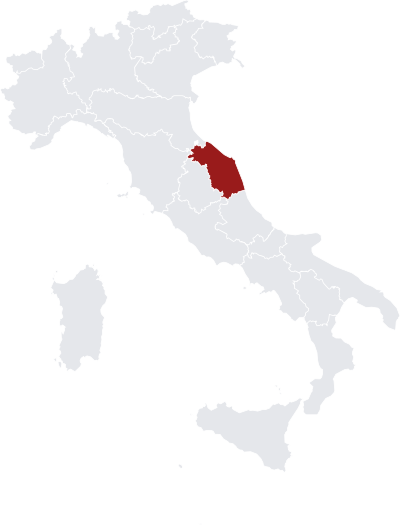
The Marche region runs along Italy's central Adriatic coast, a thin strip of land where the Apennine mountains descend sharply toward the sea. This geography creates a striking range of microclimates — cool hillside air, warm maritime breezes, and well-drained clay and limestone soils — that together produce wines of real precision and character. Despite sitting between the more famous wine powerhouses of Tuscany to the west and Abruzzo to the south, Marche has built a distinct identity that rewards the curious drinker.
Wine has been cultivated here since antiquity. The Greeks and Romans both valued these slopes, and the tradition has continued unbroken through the medieval period to today. Modern Marche produces a range of styles, from lean, mineral whites grown in the rolling hills of the hinterland to structured, age-worthy reds from the coastal promontories north and south of Ancona. What unites them is a freshness — a lively acidity and clean fruit profile — that makes them among the most food-friendly wines in Italy.
This guide covers the region's most significant denominations: Verdicchio dei Castelli di Jesi, Rosso Conero, Rosso Piceno, and Lacrima di Morro d'Alba. Whether you are exploring Italian wine for the first time or adding depth to an existing knowledge, Marche deserves serious attention.
Verdicchio dei Castelli di Jesi
The Flagship White of Marche
Verdicchio Castelli di Jesi DOC stands as Marche's most important white wine, produced from the Verdicchio grape in the hills surrounding the town of Jesi, roughly 30 kilometres inland from Ancona. The grape takes its name from the faint greenish tinge in the skin, a trait that carries through into the wine's pale straw colour with green highlights.
In the glass, Verdicchio dei Castelli di Jesi delivers citrus — lemon zest, grapefruit — alongside white peach and almond. The finish carries a characteristic bitter note, clean and persistent, that makes it exceptionally good at the table. Acidity is high, tannins are absent, and the body ranges from light to medium depending on how the wine is made. Classico Superiore and Riserva bottlings spend more time on the lees and in bottle, gaining texture and complexity without losing the defining freshness.
Serving temperature matters here. Drink the standard bottlings at 8–10°C to preserve the aromatic lift. Riserva versions, which can age for five to ten years in good vintages, benefit from a slightly warmer pour at 10–12°C to allow the fuller structure to show. On a warm evening, a chilled glass of Verdicchio alongside grilled fish or seafood pasta is a pairing of near-perfect logic. It also works well with vegetable-forward dishes, fried artichokes, and fresh goat's cheese.
For buyers, look for producers in the Classico subzone — the older, hillier heartland of the DOC — where yields are lower and wines tend to show more concentration and mineral depth.
Rosso Conero
Structure and Fruit from Monte Conero
North of Ancona, the limestone massif of Monte Conero juts into the Adriatic, creating a sheltered amphitheatre of south-facing slopes. Rosso Conero DOC grows here almost exclusively on Montepulciano, a grape that elsewhere in central Italy — most famously across the border in Montepulciano d'Abruzzo DOC — tends toward deep colour, soft tannins, and generous dark fruit.
On the Conero hillsides, the combination of maritime winds, calcareous soils, and careful viticulture pulls Montepulciano in a more structured direction. Rosso Conero delivers blackberry, plum, and dried violet aromas, with earthy undertones of tobacco and iron. Tannins are firm but ripe, and the wine carries enough acidity to age gracefully. Basic bottlings are approachable within two to three years; the Riserva category, which requires additional ageing, can develop for a decade or more.
Food pairings lean naturally toward the robust. Grilled lamb chops, braised pork with rosemary, aged Pecorino, and pasta with lamb ragu all sit comfortably alongside a glass of Rosso Conero. Those drawn to the structured reds of Tuscany — think Brunello di Montalcino DOCG or Chianti Classico DOCG — will find Rosso Conero a genuinely interesting and more affordable alternative. For a broader view of how Italian reds compare, the Best Italian Red Wines guide provides useful context.
Rosso Piceno
The Versatile Red of the Southern Marche
Rosso Piceno DOC covers a large swath of southern Marche, from the hills around Ascoli Piceno inland to the coast. The blend is built primarily on Sangiovese and Montepulciano, the proportions of which vary by producer and subzone. The Superiore designation — applied to wines from a specific zone near Offida — generally indicates greater concentration and ageing potential.
Compared to Rosso Conero, Rosso Piceno tends to be lighter on its feet. The Sangiovese component brings cherry, dried herbs, and a savory edge; Montepulciano adds body and dark fruit. The result is a wine that sits squarely in the medium-bodied category — structured enough for a proper dinner, but not so demanding that it requires years of cellaring before it is enjoyable. This makes Rosso Piceno one of the better everyday red wines Marche produces.
Pair it with local specialties: vincigrassi (the region's baked pasta), porchetta, olive ascolane (fried stuffed olives), and grilled meats. It also holds its own with tomato-based pasta sauces, where its acidity keeps things lively. Fans of central Italian reds who already know Umbria's Sagrantino di Montefalco DOCG will find Rosso Piceno a lighter, more approachable counterpart in the same geographic family.
Lacrima di Morro d'Alba
A Rare Aromatic Red Worth Seeking Out
Lacrima di Morro d'Alba DOC is one of Italy's most unusual wines, produced from the Lacrima grape — a variety grown almost nowhere else in the world — in a cluster of hillside villages north of Ancona. The name translates roughly as "tear of Morro d'Alba," a reference to the way the thin-skinned berries release juice when ripe.
The wine is immediately distinctive. Deep purple in colour, intensely perfumed with rose, violet, wild cherry, and cloves, Lacrima is soft in tannin and forward in fruit — a combination that can seem almost more like a perfume than a traditional red wine in its youth. Acidity is moderate, body is light to medium, and the finish tends toward spice and dried floral notes. It does not age like Rosso Conero; drink it within three to five years of the vintage to catch the aromatics at their peak.
Because of its softness and aromatic intensity, Lacrima pairs well with foods that would overwhelm more delicate whites but do not need a full-bodied red. Cured meats, soft cheese boards, pizza, pasta with light meat sauces, and even some Asian-inspired dishes all work. It also makes a compelling argument for anyone interested in rare indigenous Italian varieties — a category that the Italian Wine Classification Guide explores in broader detail.
Buying Tips for Marche Wines
Marche wines remain undervalued relative to their quality. Verdicchio dei Castelli di Jesi offers some of Italy's best white wine at prices well below comparable bottles from Tuscany or Piedmont. For reds, Rosso Conero Riserva bottlings routinely compete with wines costing significantly more from other regions.
When selecting bottles, pay attention to the vintage year. Whites — particularly Verdicchio — show best within three to five years of harvest unless you are buying a deliberately aged Riserva. Reds from Rosso Conero can be cellared for seven to twelve years in good vintages. Seek out small to mid-sized producers from the Classico or Superiore subzones for the best quality-to-price ratio.
Explore More
Marche sits at the center of a rich network of central Italian wine traditions. If you enjoyed the structured whites, the Best Italian White Wines guide covers the full breadth of the country's white wine production. For the reds, the Best Sangiovese Wines guide explores how this key Rosso Piceno grape performs across Italy.
Neighbouring regions offer compelling comparisons. Abruzzo to the south produces Montepulciano in a richer, more opulent style. Umbria to the west delivers its own take on central Italian reds. If your interest runs toward seafood pairings, the Best Wines for Seafood guide offers targeted recommendations that include several bottles from this coastline.
For those building a cellar, Rosso Conero Riserva earns a place among the Best Italian Wines to Cellar, offering age-worthiness at a price point that still makes sense. And if you are newer to Italian wine and looking for a clear entry point into the country's regional diversity, Best Italian Wines for Beginners is a practical starting place.
Sources
Production rules and official information from the consortia of the wines in this guide:
- Verdicchio Castelli di Jesi DOC · imtdoc.it
- Montepulciano d'Abruzzo DOC · vinidabruzzo.it
- Brunello di Montalcino DOCG · consorziobrunellodimontalcino.it
- Chianti Classico DOCG · chianticlassico.com
- Sagrantino di Montefalco DOCG · consorziomontefalco.it