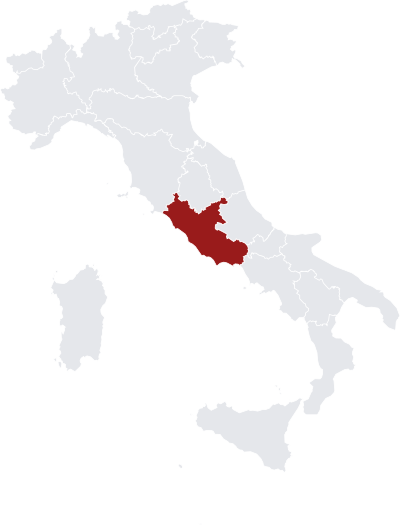
Best Lazio Wines
Lazio sits at the heart of Italy — geographically, historically, and gastronomically. The region surrounding Rome has pr
Lazio sits at the heart of Italy — geographically, historically, and gastronomically. The region surrounding Rome has produced wine for more than two millennia, feeding emperors, popes, and pilgrims alike. Yet for much of the twentieth century, Lazio coasted on its legacy, producing high volumes of anonymous white wine that satisfied local taverns but rarely attracted serious attention from collectors or wine writers. That is changing. A new generation of producers is rethinking the region's volcanic soils, ancient grape varieties, and hillside appellations, turning out wines that belong in any serious conversation about Italian viticulture.
The landscape of Lazio breaks into distinct viticultural zones. The Castelli Romani hills southeast of Rome — a ridge of extinct volcanoes rising from the flat Campagna — form the most densely planted area. Further north, the town of Montefiascone sits above Lake Bolsena, home to one of Italy's most memorably named wines. To the southeast, the Cesanese grape grows across two separate DOC zones, producing robust reds that represent Lazio's most compelling case for serious cellar consideration. Between these poles, dozens of smaller producers are working with indigenous varieties, rediscovering what this land can do when yields are controlled and winemaking is thoughtful.
This guide covers the denominations, grapes, and wines that define Lazio today, with practical notes on what to buy, what to expect in the glass, and what to eat alongside them.
Frascati and the Castelli Romani
The Appellation
Frascati is the most famous white wine of Lazio, produced in the Alban Hills (Colli Albani) directly southeast of Rome. The DOC covers a broad area; the Frascati Superiore DOCG, established in 2011, covers a more restricted hillside zone with stricter yield limits. Both rely primarily on Malvasia Bianca di Candia and Malvasia del Lazio, blended with Greco, Trebbiano, and Bombino Bianco.
The volcanic soils here — rich in potassium, phosphorus, and mineral deposits from ancient eruptions — give Frascati its defining texture: a slightly waxy, almost saline quality that distinguishes it from the neutral whites produced in the flatlands below. Good Frascati pours pale straw with green tints, offers aromas of white peach, almond, and fennel frond, and finishes with a clean mineral snap. Poor Frascati, sadly, still exists in abundance — oxidised, thin, and carelessly made. Buying from a named producer rather than a supermarket blend makes an enormous difference.
Serving and Pairing
Frascati at its best is a summer wine in every practical sense. Serve it at 8–10°C. It works perfectly at outdoor tables: antipasto of cured meats and aged pecorino, salt cod (baccalà) prepared Roman-style, carciofi alla giudia (fried artichokes), or grilled sea bass. The Castelli Romani DOC, which spans a wider arc of the volcanic hills, follows similar grape rules and provides the same easy-drinking character at lower price points.
For similar white wines from neighbouring regions, Umbria offers dry whites from Orvieto, while the whites of Campania — particularly Fiano di Avellino DOCG and Greco di Tufo DOCG — represent more complex and age-worthy expressions from volcanic soils further south.
Est! Est!! Est!!! di Montefiascone
History and Hype
Few wines arrive with as much narrative baggage as Est! Est!! Est!!! di Montefiascone. The legend traces back to a twelfth-century bishop whose scout was sent ahead to mark inns with good wine using the Latin word "est" (it is). At Montefiascone, the wine was reportedly so good the scout wrote the word three times. Whether true or not, the name has stuck for nine centuries.
The wine itself is a dry or off-dry white made from Trebbiano Toscano, Trebbiano Giallo (Rossetto), and Malvasia Bianca Lunga, grown on the volcanic shores of Lake Bolsena in northern Lazio. The DOC territory is genuinely interesting: pumice-rich soils, significant diurnal temperature variation, and a lake that moderates summer heat. In careful hands, the wine delivers fresh citrus, dried herbs, and a pleasant mineral edge. In less careful hands, it leans thin and flat. Look for producers who pick early to preserve acidity and who use temperature-controlled fermentation.
Serve at 8–9°C alongside freshwater fish from Lake Bolsena — pike (luccio) and perch (persico) in particular — or with light pasta dishes and fresh ricotta. It also pairs well alongside dishes you might match with Best Italian White Wines in general: grilled vegetables, seafood risotto, and light cream sauces.
Cesanese: Lazio's Red Wine Claim
The Grape and Its Two DOCs
Cesanese is the indigenous red grape of Lazio and its most compelling argument for serious consideration alongside Sangiovese from Tuscany or Aglianico from Campania. Two main denominations exist: Cesanese del Piglio DOCG (the only DOCG in Lazio for reds, in the Ciociaria hills east of Rome) and Cesanese di Olevano Romano DOC, in the hills to the southeast.
The grape itself comes in two biotypes — Cesanese Comune and Cesanese d'Affile — with the latter considered more refined. The wine pours deep ruby, often with violet tints in youth. Aromas range across black cherry, dried violet, tobacco, and dark spice. Tannins are firm but not harsh; acidity is lively. At the entry level, Cesanese makes an excellent everyday red with real personality. At the level of single-vineyard Piglio from a serious producer, it can age for a decade and develop genuine complexity.
Food Pairings
Cesanese is a natural partner for Roman meat cookery: braised oxtail (coda alla vaccinara), lamb scottadito, slow-cooked offal, and aged Pecorino Romano. It also handles the Best Wines for Pasta role well — particularly with pasta all'amatriciana or pasta al ragù. Serve at 16–18°C. Lighter styles can be slightly cooled to 14°C in summer.
The Revived Wine Scene: Beyond the Denominations
New Producers, Old Varieties
The most exciting development in Lazio over the past fifteen years is the arrival of producers working outside or alongside the established denominations. Many use IGT Lazio designations, giving themselves freedom to blend, experiment with skin-contact whites, or plant varieties that fall outside DOC rules. Bellone, an ancient white variety once used almost exclusively for blending, is now being vinified as a single-varietal wine with impressive results — orange-tinged, textured, and genuinely age-worthy. Nero Buono, another indigenous red, is appearing in bottlings from the Colli Lanuvini zone.
This experimental energy is not unique to Lazio. Similar movements are reshaping Sicily around the Etna DOC, and parts of Abruzzo are reconsidering the Montepulciano d'Abruzzo DOC with the same fresh eyes. But Lazio's proximity to Rome — a city of millions with sophisticated restaurant culture and strong demand for local products — gives the revival an immediate market and momentum.
Buying Tips
- For Frascati, look for Frascati Superiore DOCG from named estates. Avoid bottles without a vintage year.
- For Cesanese, Piglio DOCG from producers in the Ciociaria zone offers the best value-to-quality ratio among Lazio reds.
- Est! Est!! Est!!! is widely available at low prices; spend a little more for a certified organic producer using estate-grown Trebbiano Giallo.
- IGT Lazio whites from Bellone or Malvasia del Lazio represent some of the most interesting value in Italian white wine right now.
- All Lazio whites should be purchased from recent vintages. These are not wines to age unless you are buying from a specifically age-worthy producer.
Explore More
If Lazio's wines have opened your appetite for Italian regional wine, several guides take the exploration further.
The volcanic soil thread that runs through Frascati and Cesanese connects directly to Best Sicily Wines and the mineral intensity of Etna. For Roman food pairings, Best Wines for Pasta and Best Wines for Seafood offer structured recommendations across all Italian regions.
For broader context on how Lazio's DOC and DOCG system works alongside the rest of Italy, the Italian Wine Classification Guide explains the tier structure clearly. And if Cesanese has made you curious about other underrated Italian reds, Best Italian Red Wines surveys the full landscape — from Nebbiolo in Piedmont to Primitivo in Puglia.
Finally, for visitors planning a trip to Rome, the Castelli Romani are less than an hour from the city centre — a wine country that most tourists overlook entirely, and that rewards the detour.
Sources
Production rules and official information from the consortia of the wines in this guide:
- Fiano di Avellino DOCG · consorziovinidirpinia.it
- Greco di Tufo DOCG · consorziovinidirpinia.it
- Etna DOC · consorzioetnadoc.com
- Montepulciano d'Abruzzo DOC · vinidabruzzo.it