Friuli Wine Guide: The Wines of Friuli Venezia Giulia
Italy's great white wine region: Friulano, Ribolla Gialla, Pinot Grigio, orange wines and native reds, zone by zone
Friuli Venezia Giulia is Italy's great white wine region, home of Friulano, Ribolla Gialla and orange wine. Discover its wines, zones and best bottles.
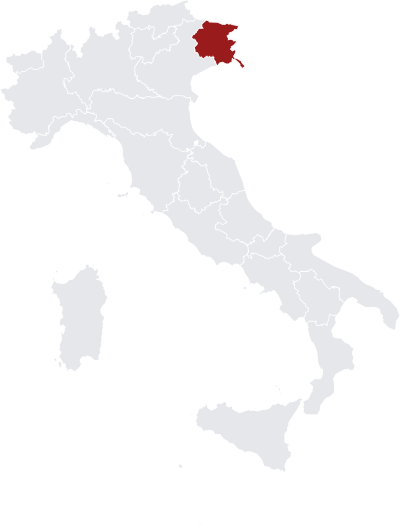
Tucked into Italy's northeastern corner between the Alps, Slovenia and the Adriatic, Friuli Venezia Giulia is small but remarkably varied. Cool air from the mountains and warm breezes from the sea give its wines freshness and aromatic intensity. Friuli is best known for its whites, both native grapes such as Friulano and Ribolla Gialla and international ones such as Pinot Grigio and Sauvignon, but it also makes savoury native reds, rare sweet wines, and the skin-contact "orange" wines that made it famous among sommeliers.
Friuli Wines at a Glance
| Wine | Style | Best zones | Price |
|---|---|---|---|
| Friulano | Dry white: pear, almond, herbs | Collio, Colli Orientali | $$ |
| Pinot Grigio | Dry white, also copper-coloured ramato | Collio, Grave, Isonzo | $–$$ |
| Sauvignon | Aromatic white: grapefruit, elderflower | Collio, Isonzo | $$ |
| Ribolla Gialla | Crisp white, sparkling or orange | Collio, Colli Orientali | $$ |
| Malvasia Istriana | Aromatic, saline white | Carso, Isonzo | $$ |
| Vitovska | Mineral white, often skin-contact | Carso | $$ |
| Collio Bianco and white blends | Rich, layered white | Collio | $$–$$$ |
| Refosco dal Peduncolo Rosso | Tart, savoury red | Grave, Colli Orientali | $–$$ |
| Schioppettino | Peppery, medium-bodied red | Colli Orientali (Prepotto) | $$ |
| Pignolo | Powerful, tannic red | Colli Orientali | $$$ |
| Picolit | Sweet white | Colli Orientali | $$$ |
| Ramandolo | Sweet white from Verduzzo | Hills north of Udine | $$ |
Price guide for typical US retail: $ under $20, $$ $20–40, $$$ over $40.
The Wine Zones of Friuli
Friuli isn't one uniform region but a patchwork of small zones, from the hills on the Slovenian border to the gravel plains and the karst plateau above Trieste.
- Collio DOC: rolling hills west of Gorizia on the Slovenian border, with marl and sandstone soils known locally as ponca. This is the source of Friuli's most celebrated whites, both varietal wines and Collio Bianco blends. Across the border the same hills are called Brda.
- Colli Orientali del Friuli DOC: the hills east of Udine, around Cividale, Buttrio, Manzano and Prepotto, with the same ponca soils. Excellent whites, the best native reds and the sweet Picolit.
- Friuli Isonzo DOC: the plain along the Isonzo river south of the Collio, with stony soils that give rich, ripe whites and reds.
- Friuli Grave DOC: the largest zone, on the gravelly plains of central Friuli (grave means gravel), producing good-value Pinot Grigio, Friulano, Merlot and Refosco.
- Carso DOC: the limestone karst plateau above Trieste, with thin red soils and strong winds. It's the home of Vitovska, Malvasia Istriana and Terrano, a local form of Refosco.
- Friuli DOC: a regional denomination covering the whole of Friuli.
The region's DOCGs are small and specialised. Colli Orientali del Friuli Picolit DOCG and Ramandolo DOCG are sweet wines, while Rosazzo DOCG is a white blend based on Friulano from the hills around the Abbey of Rosazzo. Many producers also use the broader Venezia Giulia IGT, especially for orange wines and blends.
Friuli's White Wines
Friulano is the region's signature white. It was called Tocai Friulano until 2007, when the name was dropped to avoid confusion with Hungary's Tokaji. It's medium-bodied and soft, with pear, almond, meadow herbs and a slightly bitter finish. In Friuli it's the everyday white served with prosciutto di San Daniele.
Pinot Grigio from Friuli is fuller and more characterful than the mass-market style, with ripe pear, peach and spice. Friuli also revived the traditional ramato style, in which brief contact with the grape skins gives a copper colour and more texture.
Sauvignon from the Collio and Isonzo is among the best in Italy: intense, with grapefruit, elderflower, tomato leaf and a mineral backbone.
Ribolla Gialla, an ancient grape of the border hills, makes crisp, citrusy whites and lively sparkling wines, and is the main grape of Friuli's orange wines.
Malvasia Istriana and Vitovska are the whites of the Carso and the coast: aromatic, saline and mineral.
White blends are a Friulian speciality. Collio Bianco and blends such as Jermann's Vintage Tunina, first made in 1975, combine local and international grapes into rich, layered whites that can age for a decade.
Orange Wine: Friuli's Skin-Contact Revival
In the 1990s, a few winemakers in Oslavia, a village in the Collio on the Slovenian border, began fermenting white grapes on their skins for weeks or months, as had once been done locally. Josko Gravner, who later adopted Georgian clay amphorae, and Stanko Radikon were the pioneers. The resulting orange wines are amber-coloured, with light tannins and flavours of dried apricot, orange peel, honey, tea and spice. Today Ribolla Gialla, Friulano, Pinot Grigio and Vitovska are all made this way, and Friuli is considered one of the world's reference regions for the style. See our Italian orange wine guide.
Friuli's Red Wines
Friuli reds are less known but well worth discovering:
- Refosco dal Peduncolo Rosso: the archetypal Friulian red, deep in colour, with tart dark berries, a bitter-almond finish and lively acidity.
- Schioppettino: a native grape rescued from near extinction in the 1970s around Prepotto; medium-bodied, with raspberry and a distinctive black-pepper note.
- Pignolo: rare and powerful, with firm tannins that need years of ageing.
- Merlot and Cabernet Franc: grown since the nineteenth century, especially on the plains, for fresh, herbal reds.
- Terrano: the high-acid red of the Carso, a local form of Refosco.
Friuli's Sweet Wines
Picolit is one of Italy's most prized sweet wines. The vine naturally sets very few berries per bunch, so yields are tiny; the grapes are often dried before pressing, giving an elegant wine with apricot, honey and flowers. Ramandolo, from dried Verduzzo grapes grown in the hills north of Udine, is richer and slightly tannic. See our Italian dessert wines guide.
Which Friuli Wine to Try First
- The classic introduction: a Friulano from the Collio or Colli Orientali.
- If you drink Pinot Grigio: a Collio Pinot Grigio, or a ramato to see a different side of the grape.
- If you like Sauvignon Blanc: a Collio or Isonzo Sauvignon.
- For something different: an orange Ribolla Gialla from Oslavia.
- For a red: a Refosco dal Peduncolo Rosso, or a Schioppettino for something rarer.
- For dessert: a Picolit or a Ramandolo.
Producers worth knowing include Jermann, Livio Felluga, Venica & Venica, Schiopetto, Vie di Romans, Ronchi di Cialla, Gravner and Radikon.
Food Pairing with Friuli Wines
- Prosciutto di San Daniele: Friulano is the local match.
- Frico (crispy Montasio cheese and potato): Friulano or Ribolla Gialla.
- Seafood from the Adriatic: Sauvignon, Malvasia Istriana or Pinot Grigio.
- Jota (bean and sauerkraut soup from Trieste): Terrano or Refosco.
- Roast pork, game and mushroom dishes: orange wines, Schioppettino or Pignolo.
- Gubana (a sweet pastry with nuts and raisins): Picolit or Ramandolo.
Frequently Asked Questions About Friuli Wine
What wine is Friuli known for?
Friuli Venezia Giulia is known above all for its white wines, especially Friulano, Ribolla Gialla, Pinot Grigio and Sauvignon from the Collio and Colli Orientali hills, and for pioneering skin-contact orange wines.
What is Pinot Grigio from Friuli like?
Friuli Pinot Grigio, especially from the Collio and Colli Orientali, is fuller and more aromatic than mass-market Italian Pinot Grigio, with ripe pear, peach and a mineral finish. The traditional ramato style is copper-coloured from brief skin contact.
Does Friuli make red wine?
Yes. Native reds include Refosco dal Peduncolo Rosso, Schioppettino, Pignolo and Terrano, and Merlot and Cabernet Franc have a long history in the region. Reds are less famous than the whites but often excellent value.
Is Friuli in the Dolomites?
Partly. The Friulian Dolomites in the northwest of the region are part of the UNESCO-listed Dolomites, but Friuli's vineyards lie further south, in the hills along the Slovenian border, on the central plains and on the karst plateau near Trieste.
What is orange wine from Friuli?
It's white wine made like red wine, fermented with the grape skins for weeks or months. This gives an amber colour, light tannins and flavours of dried fruit, honey and tea. The style was revived in the Collio village of Oslavia in the 1990s.
Is Friuli the same as Friuli Venezia Giulia?
Friuli Venezia Giulia is the full name of the region; "Friuli" is the common short form, and it refers mainly to the wine areas around Udine, Gorizia and Pordenone. Venezia Giulia is the area around Trieste.
Explore More
- All Friuli Venezia Giulia wines and wineries, with the full list of producers and denominations
- Italian white wine: the 15 best grapes and styles
- Best Pinot Grigio wines
- Best Italian orange wines
- Venice wine guide
Sources
Production rules and official information from the consortia of the wines in this guide:
- Collio DOC · collio.it
- Colli Orientali del Friuli DOC · colliorientali.com
- Friuli Isonzo DOC · docfriuli.eu
- Friuli Grave DOC · docfriuligrave.com
- Carso DOC · www2.vinofriulano.it
- Colli Orientali del Friuli Picolit DOCG · colliorientali.com
- Ramandolo DOCG · colliorientali.com
- Rosazzo DOCG · colliorientali.com