Lombardy Wine Guide: Franciacorta, Valtellina, Oltrepò Pavese and More
Italy's finest traditional-method sparkling wine, Alpine Nebbiolo and the hills of the Oltrepò Pavese: the key wines and bottles to try first
Lombardy is the home of Franciacorta, Italy's finest sparkling wine, and of the mountain Nebbiolo of Valtellina. Discover its wines, zones and what to try first.
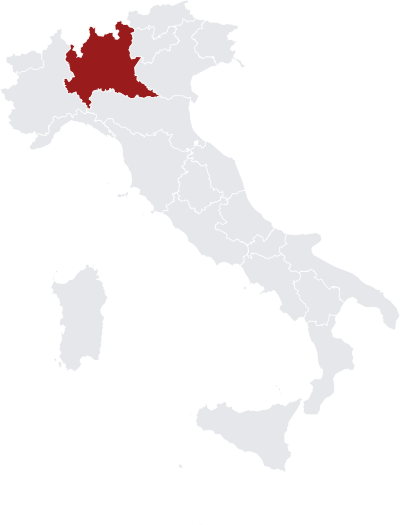
Lombardy, the region of Milan, is better known for fashion and industry than for wine, yet it has some of Italy's most distinctive wine areas. They are scattered across very different landscapes: the hills south of Lake Iseo, the steep Alpine terraces of the Valtellina, the rolling hills of the Oltrepò Pavese south of the Po, and the shores of Lake Garda. The region's specialities are traditional-method sparkling wine and Alpine Nebbiolo.
Lombardy Wines at a Glance
| Wine | Style | Main grapes | Where | Price |
|---|---|---|---|---|
| Franciacorta | Traditional-method sparkling | Chardonnay, Pinot Nero, Pinot Bianco | Lake Iseo | $$–$$$ |
| Valtellina Superiore | Medium red, mountain Nebbiolo | Nebbiolo (Chiavennasca) | Valtellina | $$ |
| Sforzato di Valtellina | Full red from dried grapes | Nebbiolo | Valtellina | $$–$$$ |
| Oltrepò Pavese Metodo Classico | Traditional-method sparkling | Pinot Nero | Oltrepò Pavese | $$ |
| Bonarda dell'Oltrepò Pavese | Fruity red, often frizzante | Croatina | Oltrepò Pavese | $ |
| Lugana | Dry white | Turbiana | Lake Garda | $–$$ |
| Valtènesi Chiaretto | Pale rosé | Groppello | Lake Garda | $ |
| Moscato di Scanzo | Sweet red | Moscato di Scanzo | Bergamo | $$$ |
Price guide for typical US retail: $ under $20, $$ $20–40, $$$ over $40.
Franciacorta
Franciacorta DOCG is Italy's leading traditional-method sparkling wine, made like Champagne with a second fermentation in the bottle. The vineyards lie on the morainic hills south of Lake Iseo, between Brescia and Bergamo. The main grape is Chardonnay, with Pinot Nero, Pinot Bianco and the local Erbamat.
The rules require long ageing on the lees: at least 18 months for non-vintage wines, 30 months for vintage (Millesimato) and 60 months for Riserva. Two styles are special to Franciacorta: Satèn, made only from white grapes at lower pressure, with a creamy, silky mousse, and Rosé, with at least a share of Pinot Nero. Still wines from the same area are labelled Curtefranca DOC.
Well-known houses include Ca' del Bosco, Bellavista, Berlucchi and Contadi Castaldi. See the best Franciacorta wines and the Italian sparkling wine guide.
Valtellina
In the far north of Lombardy, the Valtellina runs east to west along the Adda river, close to the Swiss border. Its south-facing slopes are covered with narrow terraces held up by thousands of kilometres of dry-stone walls, where Nebbiolo, called Chiavennasca here, is grown at the northern limit of its range.
- Valtellina Superiore DOCG comes from five historic subzones: Sassella, Grumello, Inferno, Valgella and Maroggia. The wines are lighter and more delicate than Barolo, with red cherry, rose, herbs and a stony, Alpine freshness.
- Sforzato di Valtellina DOCG, also written Sfursat, is made from grapes dried for several months, like Amarone, giving a rich, powerful red of at least 14% alcohol.
See also Valtellina DOCG and the best Nebbiolo wines.
Oltrepò Pavese
South of the Po river, in the province of Pavia, the hills of the Oltrepò Pavese form Lombardy's largest wine area. It is one of Italy's main sources of Pinot Nero, used both for still wines (Pinot Nero dell'Oltrepò Pavese DOC) and for traditional-method sparkling wine (Oltrepò Pavese Metodo Classico DOCG).
The local red is Bonarda dell'Oltrepò Pavese DOC, made from Croatina, often lightly sparkling, fruity and perfect with salumi. The bigger, blended reds are labelled Oltrepò Pavese DOC and Buttafuoco dell'Oltrepò Pavese DOC; Provincia di Pavia IGT covers many everyday wines.
Lake Garda: Lugana and Valtènesi
On the southern shore of Lake Garda, shared with Veneto, Lugana DOC makes creamy, citrusy whites from the Turbiana grape, one of northern Italy's best-value whites. On the western shore, the Valtènesi makes a pale, delicate Chiaretto rosé from the local Groppello grape. See also Garda DOC.
Moscato di Scanzo
The tiny Moscato di Scanzo DOCG, from the hills near Bergamo, is one of Italy's smallest denominations: a rare sweet red made from dried grapes, with notes of rose, spice and dried fruit.
Which Lombardy Wine to Try First
- For a celebration: a Franciacorta Brut, or a Satèn for a softer style.
- If you like Pinot Noir or Burgundy: a Valtellina Superiore from Sassella or Grumello.
- For a special occasion: a Sforzato di Valtellina or a vintage Franciacorta.
- For everyday drinking: a Bonarda dell'Oltrepò Pavese or a Lugana.
- For summer: a Valtènesi Chiaretto.
Producers worth knowing include Ca' del Bosco, Bellavista and Berlucchi in Franciacorta; Nino Negri, Ar.Pe.Pe., Rainoldi and Sandro Fay in Valtellina; and Ca' dei Frati for Lugana.
Food Pairing with Lombardy Wines
- Franciacorta: aperitivo, fried foods, risotto alla milanese and fish from the lakes.
- Valtellina Superiore and Sforzato: pizzoccheri (buckwheat pasta with cabbage and cheese), bresaola, game and aged Bitto cheese.
- Bonarda: salame di Varzi, cotechino and hearty winter dishes.
- Lugana: lake fish, risotto and fresh cheeses.
- Chiaretto: antipasti and summer salads.
Frequently Asked Questions About Lombardy Wine
What wine is Lombardy known for?
Lombardy is best known for Franciacorta, Italy's top traditional-method sparkling wine, and for the mountain Nebbiolo of the Valtellina. It also produces Lugana, Bonarda and much of Italy's Pinot Nero in the Oltrepò Pavese.
What sparkling wine is famous from Lombardy?
Franciacorta, made by the traditional method like Champagne in the hills south of Lake Iseo. The Oltrepò Pavese also makes traditional-method sparkling wine from Pinot Nero.
Does Lombardy make red wine?
Yes. Its most prestigious reds are Valtellina Superiore and Sforzato, both from Nebbiolo. The Oltrepò Pavese makes Pinot Nero and the fruity, often sparkling Bonarda.
What is Valtellina wine?
Red wine from Nebbiolo grown on steep, terraced slopes in the Alpine Valtellina valley. It's lighter and more fragrant than Barolo, while Sforzato, made from dried grapes, is rich and powerful.
What is Lombardy famous for besides wine?
Milan, the lakes (Como, Garda, Iseo, Maggiore), risotto alla milanese, Grana Padano, Gorgonzola and Taleggio cheeses, and panettone.
Explore More
- All Lombardy wines and wineries, with the full list of producers and denominations
- Best Franciacorta wines
- Prosecco vs Champagne
- Best Italian sparkling wines
- Italian white wine: the 15 best grapes and styles
Sources
Production rules and official information from the consortia of the wines in this guide:
- Franciacorta DOCG · franciacorta.wine
- Curtefranca DOC · franciacorta.wine
- Valtellina Superiore DOCG · vinidivaltellina.it
- Sforzato di Valtellina DOCG · vinidivaltellina.it
- Valtellina DOCG · vinidivaltellina.it
- Pinot Nero dell'Oltrepò Pavese DOC · consorziovinioltrepo.it
- Buttafuoco dell'Oltrepò Pavese DOC · consorziovinioltrepo.it
- Lugana DOC · consorziolugana.it