Piedmont Wine Guide: Barolo, Barbaresco, Barbera and More
Nebbiolo country, from Barolo and Barbaresco to Barbera, Gavi, Moscato d'Asti and Alta Langa: the key wines, zones and bottles to try first
Piedmont wine means Nebbiolo, the grape of Barolo and Barbaresco, but also Barbera, Dolcetto, Gavi, Moscato d'Asti and Alta Langa. Discover its wines and what to try first.
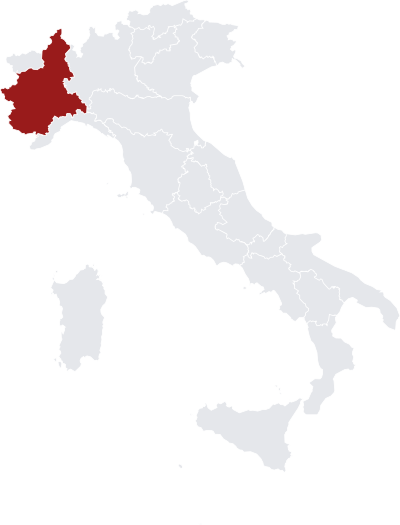
Piedmont (Piemonte in Italian, "at the foot of the mountains") lies in Italy's northwest corner, surrounded by the Alps on three sides. It is the home of Barolo and Barbaresco, two of the world's great age-worthy reds, and of a long list of native grapes that make everything from everyday reds to sweet, sparkling Moscato. Piedmont has more DOCGs than any other Italian region and no IGT at all: every wine comes from a DOC or DOCG, and the regional label for wines outside the named zones is Piemonte DOC. The vineyard landscapes of the Langhe, Roero and Monferrato have been a UNESCO World Heritage Site since 2014.
Piedmont Wines at a Glance
| Wine | Style | Main grape | Where | Price |
|---|---|---|---|---|
| Barolo | Full, tannic red, long-lived | Nebbiolo | Langhe, south of Alba | $$$ |
| Barbaresco | Full red, a little more elegant | Nebbiolo | Langhe, east of Alba | $$–$$$ |
| Langhe Nebbiolo / Nebbiolo d'Alba | Medium to full red | Nebbiolo | Langhe and Roero | $–$$ |
| Gattinara and Ghemme | Medium to full red, fresh | Nebbiolo | Alto Piemonte | $$ |
| Barbera d'Asti and Barbera d'Alba | Medium red, juicy, high acidity | Barbera | Asti, Monferrato, Alba | $–$$ |
| Nizza | Fuller Barbera | Barbera | South of Asti | $$ |
| Dolcetto (Dogliani, Diano d'Alba, Ovada) | Soft, fruity red | Dolcetto | Langhe, Ovada | $ |
| Roero Arneis | Dry white, floral | Arneis | Roero | $–$$ |
| Gavi | Crisp, mineral white | Cortese | Southeast, near Liguria | $–$$ |
| Moscato d'Asti and Asti | Sweet, sparkling, low alcohol | Moscato Bianco | Asti, Canelli | $ |
| Alta Langa | Traditional-method sparkling | Pinot Nero, Chardonnay | Hills of the Langhe and Monferrato | $$ |
Price guide for typical US retail: $ under $20, $$ $20–40, $$$ over $40.
Barolo and Barbaresco
Barolo DOCG comes from eleven villages in the Langhe hills south of Alba, including Barolo, La Morra, Castiglione Falletto, Serralunga d'Alba and Monforte d'Alba. It is made from 100% Nebbiolo and aged at least 38 months before release, 18 of them in wood (62 months for Riserva). Young Barolo is pale garnet but powerful, with cherry, rose, tar, liquorice and firm tannins; it needs years in bottle and the best can age for decades. Soils and exposure vary from village to village: La Morra is often described as softer and more perfumed, Serralunga and Monforte as more structured.
Barbaresco DOCG comes from a smaller area east of Alba: Barbaresco, Neive and Treiso, with a small part of Alba. It is also 100% Nebbiolo, aged at least 26 months (50 for Riserva). Barbaresco is usually a little lighter and more approachable when young, though the best are just as long-lived.
Both wines now name their single vineyards on the label as Menzioni Geografiche Aggiuntive (MGA), such as Cannubi and Brunate in Barolo, or Asili and Rabajà in Barbaresco. Read Barolo vs Barbaresco and our best Barolo wines for more.
Why is Barolo so expensive? The area is small, the wine must age for over three years before release, yields are limited, and the best single vineyards and producers are in high demand around the world. For Nebbiolo at a fraction of the price, look at Langhe Nebbiolo, Nebbiolo d'Alba, Roero and Alto Piemonte.
Other Nebbiolo Wines
- Langhe DOC Nebbiolo and Nebbiolo d'Alba DOC: younger, fruitier Nebbiolo, often from the same producers as Barolo and Barbaresco.
- Roero DOCG: Nebbiolo from the sandy hills across the Tanaro river, more perfumed and softer.
- Alto Piemonte: the hills north of Novara and Vercelli, where Nebbiolo is called Spanna. Gattinara DOCG, Ghemme DOCG, Boca DOC, Bramaterra DOC and Lessona DOC are fresher, more mineral and often good value.
- Carema DOC: mountain Nebbiolo from stone terraces near the border with Valle d'Aosta.
Barbera and Dolcetto
Barbera is Piedmont's most planted red grape and its everyday wine: deep in colour, with sour cherry, plum and bright acidity but low tannin, which makes it very food-friendly.
- Barbera d'Asti DOCG and Barbera d'Asti DOC: the largest area, in the hills around Asti.
- Nizza DOCG: the top Barbera zone south of Asti, with longer ageing.
- Barbera d'Alba DOC: fuller Barbera from the Langhe and Roero.
- Barbera del Monferrato Superiore DOCG: from the Monferrato hills.
Dolcetto ("little sweet one", though the wine is dry) is soft, purple and fruity, with low acidity and a bitter-almond finish, made to drink young. Look for Dogliani DOCG, Dolcetto di Diano d'Alba DOCG, Dolcetto d'Alba DOC and Dolcetto di Ovada Superiore DOCG.
See also our best Barbera wines and best Dolcetto wines.
Other Native Reds
- Ruchè di Castagnole Monferrato DOCG: an aromatic red with rose, spice and red fruit, from a small area near Asti (Ruchè grape).
- Grignolino: pale, peppery and tannic, from the Monferrato and Asti (Grignolino d'Asti DOC).
- Freisa: a relative of Nebbiolo, still or lightly sparkling, with raspberry and firm tannins (Freisa d'Asti DOC).
- Pelaverga: a light, peppery red from Verduno, in the Barolo area.
Piedmont White Wines
- Gavi DOCG: Piedmont's best-known white, made from Cortese near the border with Liguria. Crisp, dry and mineral, with lemon, green apple and almond.
- Roero Arneis: from the Roero DOCG, with pear, apricot, white flowers and almond; also Langhe Arneis DOC.
- Timorasso: a revived native grape from the Colli Tortonesi DOC, full and mineral, sold as Derthona. It ages well.
- Erbaluce di Caluso DOCG: a high-acid white from the Canavese, north of Turin, also made as sparkling and sweet passito (Erbaluce grape).
- Langhe Chardonnay and Langhe Bianco: some Barolo producers also make serious whites under the Langhe DOC.
Sparkling and Sweet Wines
- Moscato d'Asti DOCG: gently sparkling, sweet and around 5% alcohol, with peach, orange blossom and fresh grapes. Drink the most recent vintage.
- Asti DOCG: fully sparkling Moscato, usually sweet; a dry Asti Secco also exists.
- Alta Langa DOCG: traditional-method sparkling wine from Pinot Nero and Chardonnay, aged at least 30 months on the lees. Piedmont's answer to Champagne and Franciacorta.
- Brachetto d'Acqui DOCG: a sweet, sparkling red with strawberry and rose (Brachetto grape).
The Main Wine Zones
- Langhe: the hills around Alba, home of Barolo, Barbaresco, Dolcetto and the white truffle.
- Roero: across the Tanaro from the Langhe, with sandy soils, Arneis and lighter Nebbiolo.
- Monferrato and Asti: rolling hills between Asti and Alessandria, the land of Barbera, Grignolino, Ruchè and Moscato.
- Gavi and the Colli Tortonesi: the southeast, near Liguria, for Gavi and Timorasso.
- Alto Piemonte and the Canavese: the Alpine foothills to the north, for Gattinara, Ghemme, Carema and Erbaluce.
Which Piedmont Wine to Try First
- For everyday drinking: a Barbera d'Asti or a Dolcetto d'Alba.
- For Nebbiolo on a budget: a Langhe Nebbiolo, a Roero or a Gattinara.
- The classics: a Barbaresco, then a Barolo, ideally with at least 8–10 years from the vintage.
- For white wine lovers: a Gavi, a Roero Arneis, or a Timorasso for something more unusual.
- For a celebration: an Alta Langa.
- With dessert: a Moscato d'Asti or a Brachetto d'Acqui.
Producers worth knowing include Giacomo Conterno, Bartolo Mascarello, Giuseppe Rinaldi, Vietti, G.D. Vajra, Pio Cesare and Marchesi di Barolo in Barolo; Gaja, Bruno Giacosa and Produttori del Barbaresco in Barbaresco; Braida for Barbera; Ceretto and Malvirà for Arneis; La Scolca for Gavi; and Travaglini and Antoniolo in Gattinara.
Food Pairing with Piedmont Wines
- Tajarin and agnolotti del plin: Langhe Nebbiolo, Barbera d'Alba or Dolcetto.
- White truffle dishes: an aged Barolo or Barbaresco.
- Brasato al Barolo (beef braised in Barolo) and game: Barolo or Barbaresco.
- Vitello tonnato and carne cruda: Dolcetto, Arneis or a young Nebbiolo.
- Bagna cauda and pizza: Barbera.
- Fish, seafood and Ligurian pesto: Gavi.
- Hazelnut cake, fruit tarts and panettone: Moscato d'Asti.
Frequently Asked Questions About Piedmont Wine
What kind of wine is Piedmont known for?
Above all for red wines from the Nebbiolo grape, Barolo and Barbaresco, and for Barbera and Dolcetto. It also makes the white Gavi and Roero Arneis, the sweet sparkling Moscato d'Asti and the traditional-method sparkling Alta Langa.
What is the best wine from Piedmont?
Barolo is usually considered Piedmont's greatest wine, with Barbaresco close behind. For everyday value, Barbera d'Asti and Langhe Nebbiolo are among Italy's best buys.
What is the best red wine from Piedmont for beginners?
Barbera: it is fruity, fresh and low in tannin, easy to enjoy young and with food. Then try a Langhe Nebbiolo before moving to Barbaresco and Barolo.
Why is Barolo so expensive?
It comes from a small area, ages for at least 38 months before release, and its top vineyards and producers are in demand worldwide. Good Barolo is still available for $40–60; single-vineyard wines from famous producers cost much more.
What white wine is Piedmont known for?
Gavi, made from Cortese, and Roero Arneis are the best known. Timorasso and Erbaluce di Caluso are smaller, increasingly sought-after alternatives.
Is Piemonte the same as Piedmont?
Yes. Piemonte is the Italian name of the region, and Piemonte DOC is the regional denomination for wines from anywhere in Piedmont.
Explore More
- All Piedmont wines and wineries, with the full list of producers and denominations
- Best Nebbiolo wines
- Best Arneis wines
- Best Italian red wines
- Best Italian wines to cellar
Sources
Production rules and official information from the consortia of the wines in this guide:
- Piemonte DOC · viniastimonferrato.it
- Barolo DOCG · langhevini.it
- Barbaresco DOCG · langhevini.it
- Langhe DOC · langhevini.it
- Nebbiolo d'Alba DOC · langhevini.it
- Roero DOCG · consorziodelroero.it
- Ghemme DOCG · piemonteland.it
- Boca DOC · prosecco.wine