Best Sardinia Wines

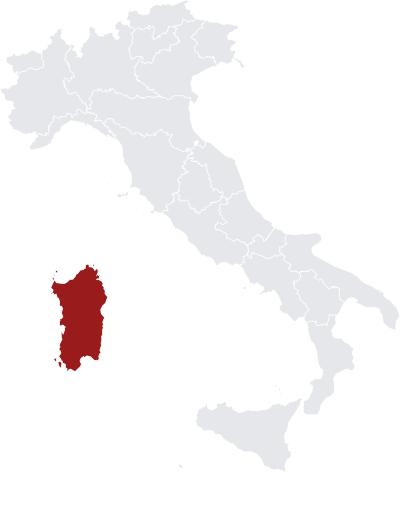
Located in the heart of the Mediterranean, roughly 200 kilometers from mainland Italy, **Sardinia** (Sardegna in Italian

Located in the heart of the Mediterranean, roughly 200 kilometers from mainland Italy, Sardinia (Sardegna in Italian) is Italy's second-largest island and one of its most distinctive wine regions. Isolated for millennia from the Italian peninsula, Sardinia developed a unique culture, language (Sardo), cuisine, and winemaking tradition that remains quite different from anywhere else in Italy. The island's wines reflect this distinctiveness—made from grape varieties found predominantly or exclusively in Sardinia, shaped by Mediterranean climate and ancient traditions, and only recently gaining the international recognition they deserve.

What makes Sardinian wine special? The answer lies in the island's unique indigenous varieties (Cannonau, Vermentino, Carignano, Monica, and others), its diverse terroir ranging from coastal vineyards to mountain sites, centuries of winemaking history influenced by various Mediterranean cultures, and a growing commitment to quality over quantity. Today, Sardinia produces some of Italy's most exciting wines—powerful, sun-drenched reds; crisp, mineral-driven coastal whites; and dessert wines of remarkable complexity.

Island Geography and Climate: Mediterranean Influences

Sardinia's landscape is remarkably diverse for an island of its size. The interior is mountainous and rugged, with the Gennargentu massif reaching nearly 1,900 meters. The coastline features stunning beaches, rocky promontories, and sheltered bays. Between coast and mountains lie rolling hills and plains where most viticulture occurs.

The island's Mediterranean climate—hot, dry summers and mild winters—is moderated by constant sea breezes and elevation. Vineyards range from sea level to 700+ meters in the interior mountains. The Maestrale wind from the northwest helps moderate temperatures and keep disease pressure low, allowing for organic viticulture and old, ungrafted vines.

Sardinia receives abundant sunshine (over 300 days annually) and limited rainfall (concentrated in winter), creating ideal conditions for full ripening. The challenge is managing water stress and preventing overripeness—issues that quality-focused producers address through site selection, canopy management, and harvest timing.

Soils vary considerably: granite dominates much of the island, particularly in the north (Gallura); limestone and clay appear in central areas; while volcanic soils exist in certain zones. The island's long isolation preserved unique terroir characteristics and grape varieties.

Vermentino: Sardinia's White Wine Star

If Sardinia has an ambassador grape, it's Vermentino, the white variety that produces the island's finest and most internationally recognized white wines. While Vermentino is grown elsewhere in Italy (Liguria, Tuscany) and in Corsica and southern France (as Rolle), Sardinia produces the variety's most distinctive expressions.

Vermentino di Gallura DOCG: Italy's First Island DOCG

In 1996, Vermentino di Gallura DOCG became Sardinia's first and (until 2011) only DOCG, recognizing the exceptional quality of Vermentino produced in Gallura—the rugged, granite-dominated northeast corner of the island.

The regulations require:
- Minimum 95% Vermentino grapes
- Grapes from the Gallura zone (provinces of Olbia-Tempio and Sassari)
- Maximum yield of 10 tons per hectare
- Minimum 12% alcohol (often 13-14% in practice)
- Superiore designation requires 13% alcohol and one year aging

Gallura's decomposed granite soils (called "granito disgregato") provide exceptional drainage and impart distinctive minerality. Combined with constant sea breezes, Mediterranean herbs growing wild throughout the region, and intense sunshine, these conditions create Vermentino with unique character.

Vermentino di Gallura: Tasting Profile

Gallura Vermentino shows:

Aromatics: White flowers (acacia, jasmine), citrus (lemon, grapefruit), green apple, pear, Mediterranean herbs (rosemary, thyme), subtle saline/mineral notes, sometimes hints of white peach and tropical fruit

Palate: Medium to full body with substantial texture, bright acidity, and a distinctive bitter-almond finish. The best examples balance ripeness with freshness, showing concentration without heaviness.

Minerality: Pronounced granite-derived minerality and saline quality, reflecting the coastal terroir

Alcohol: Typically 13-14%, but well-integrated when balanced by acidity and structure

Unlike many Italian white wines designed for immediate consumption, quality Vermentino di Gallura can age gracefully for 3-7 years, developing honeyed notes and greater textural complexity while maintaining freshness.

Top Vermentino di Gallura Producers

Capichera: Benchmark producer whose "Vendemmia Tardiva" (late harvest) shows Vermentino's aging potential and complexity. Their wines helped establish Vermentino di Gallura's reputation.

Tenute Dettori: Biodynamic farming, ungrafted old vines, traditional methods. Their Vermentino is powerful, distinctive, and age-worthy.

Cantina Gallura: Large cooperative with consistently excellent quality across various price points, making Vermentino di Gallura accessible.

Piero Mancini: Organic estate producing elegant, mineral-driven Vermentino with pronounced saline character.

Surrau: Modern winery with impressive quality, their "Branu" bottling shows remarkable concentration and complexity.

Vigne Surrau: Small production, terroir-focused wines from old vines.

Prices range from €12-18 for quality Vermentino di Gallura to €25-40 for top selections and Superiore bottlings.

Other Vermentino Zones

Beyond Gallura, Vermentino is produced throughout Sardinia under various DOC designations:

Vermentino di Sardegna DOC: Island-wide designation allowing more accessible, everyday-drinking Vermentino. Quality varies widely, but good producers offer excellent value (€8-15).

Other Regional DOCs: Various DOCs (Alghero, Arborea, etc.) include Vermentino in their regulations.

Vermentino Food Pairings

Vermentino's combination of body, acidity, and saline character makes it exceptionally versatile with seafood:

  • Raw seafood: Oysters, sea urchins (ricci), crudo
  • Grilled fish: Sea bass, sea bream, mullet
  • Seafood pasta: Spaghetti ai ricci (sea urchin), linguine alle vongole
  • Fried seafood: Fritto misto di mare
  • Bottarga: Salted, cured fish roe (Sardinian specialty)
  • Lobster (aragosta): Grilled or alla catalana
  • Mild cheeses: Fresh Pecorino Sardo

Serve at 8-10°C (46-50°F). The wine's structure allows it to handle richer preparations than delicate whites like Pinot Grigio.

Cannonau: Sardinia's Ancient Red

Cannonau (pronounced kan-NO-now) is Sardinia's most planted red variety and arguably its most important wine. This thick-skinned red grape is genetically identical to Grenache/Garnacha but takes on distinctive character in Sardinia's terroir. Many Sardinians claim the variety originated on the island and was exported to Spain and France—a claim supported by some genetic research showing Sardinian vines are among the oldest Grenache/Garnacha clones.

Regardless of its origins, Cannonau produces distinctive red wines that range from light, fruity rosés to powerful, concentrated reds with aging potential.

Cannonau di Sardegna DOC

Cannonau di Sardegna DOC, established in 1972, is an island-wide designation allowing considerable stylistic diversity. The regulations require minimum 85% Cannonau, with Bovale Sardo, Carignano, Pascale di Cagliari, or Monica completing blends.

Several sub-zones exist, each with distinctive characteristics:

Cannonau di Sardegna Oliena/Nepente di Oliena: From the Barbagia region around Oliena in central Sardinia, high elevation (350-700 meters), granite and schist soils. Produces powerful, structured wines with aging potential.

Cannonau di Sardegna Capo Ferrato: Southeastern coastal zone, warmer climate, riper fruit character.

Cannonau di Sardegna Jerzu: From hillsides around Jerzu, known for old-vine Cannonau with concentration and structure.

The DOC recognizes several wine styles:

Rosso: Dry red wine (minimum 12.5% alcohol), the most common style. Shows red fruit (raspberry, strawberry, cherry), Mediterranean herbs, spice, and moderate tannins. Can be light and fruity or concentrated and structured depending on site and winemaking.

Rosato: Dry rosé (minimum 12% alcohol), offering bright red fruit, refreshing acidity, and herbal notes. Excellent summer wine served chilled.

Riserva: Minimum 2 years aging and 13% alcohol, representing producers' top selections. More structured, complex, and age-worthy.

Classico: From the historic heartland (Barbagia), indicating traditional production area.

Superiore: Higher alcohol (13.5% minimum) and one year aging, emphasizing concentration.

Liquoroso: Fortified sweet style (minimum 17.5% alcohol), rare but traditional.

Cannonau: Tasting Profile

Cannonau di Sardegna shows considerable variation depending on zone, vineyard elevation, vine age, and winemaking, but common characteristics include:

Aromatics: Red berries (raspberry, strawberry), cherry, Mediterranean herbs (rosemary, thyme, bay leaf), spice (white pepper, cinnamon), dried flowers, sometimes leather and earth in aged examples

Palate: Light to full-bodied (depending on style), moderate to high alcohol (13-15.5%), moderate tannins, bright acidity, warm, generous fruit

Character: Distinctly Mediterranean—herbal, warm, sun-drenched, with less overt oak influence than many international wines

Aging: Lighter styles best consumed young (2-3 years); Riserva and old-vine bottlings can age 8-15 years

Top Cannonau Producers

Giuseppe Sedilesu: Old-vine Cannonau from Mamoiada (Barbagia), powerful and age-worthy, traditional style. Their "Mamuthone" bottling is legendary.

Tenute Dettori: Biodynamic estate producing distinctive, unfiltered Cannonau with remarkable depth.

Antichi Poderi Jerzu: Cooperative producing excellent quality across various price points from the Jerzu sub-zone.

Giuseppe Gabbas: Old-vine Cannonau from Nuoro province, elegant and structured.

Contini: Historic estate (founded 1898) producing traditional-style Cannonau with finesse.

Argiolas: Sardinia's largest quality producer, their "Costera" Cannonau shows what modern winemaking can achieve.

Cantina di Dorgali: Cooperative with excellent old-vine Cannonau from high elevations.

Prices range from €8-15 for everyday Cannonau to €20-40 for Riserva and old-vine selections.

Cannonau Food Pairings

Cannonau's moderate tannins and bright acidity make it exceptionally food-friendly:

  • Roasted meats: Lamb, pork (especially porchetta or porceddu—Sardinian suckling pig)
  • Grilled sausages: Sardinian sausages with fennel
  • Stews: Meat stews with tomato and herbs
  • Pecorino Sardo: Both young and aged versions
  • Game: Wild boar, venison
  • Pizza and focaccia
  • Pasta with meat ragù

Serve at 14-16°C (57-61°F), slightly cooler than many powerful reds. The refreshing acidity benefits from slight chilling.

Carignano del Sulcis: The Rising Star

While Cannonau gets the attention, many Sardinian winemakers consider Carignano (known elsewhere as Carignan) the island's most exciting red variety for age-worthy, complex wines. Carignano arrived in Sardinia from Spain centuries ago and found its ideal home in the Sulcis region—the southwestern corner of the island, particularly the islands of Sant'Antioco and San Pietro.

Carignano del Sulcis DOC

Carignano del Sulcis DOC requires minimum 85% Carignano, with Monica, Pascale, Alicante (Grenache), or other approved varieties completing blends. The zone's sandy soils (the legacy of ancient dunes) proved resistant to phylloxera, preserving ungrafted, pre-phylloxera vines—some over 100 years old—that produce wines of extraordinary concentration and character.

The regulations recognize several styles:

Rosso: Dry red, minimum 11.5% alcohol (often 13-14%)
Rosato: Dry rosé, refreshing and fruity
Superiore: 12.5% minimum alcohol, 2 years aging
Riserva: 3 years aging, top selections
Passito/Liquoroso: Sweet fortified styles, rare but traditional

Carignano: Tasting Profile

Quality Carignano del Sulcis shows:

Aromatics: Dark berries (blackberry, black cherry), Mediterranean scrub (macchia mediterranea), herbs, spice, earth, sometimes balsamic notes

Palate: Full-bodied with firm tannins, bright acidity, dark fruit concentration, and distinctive earthy/mineral character from sandy soils

Structure: More tannic and structured than Cannonau, with greater aging potential

Character: Rustic yet refined, with pronounced terroir expression

Old-vine Carignano can rival Sardinia's finest wines for complexity and aging potential (10-20 years).

Top Carignano Producers

Cantina Mesa: Modern estate producing exceptional Carignano, their "Buio" bottling shows the variety's potential for world-class wine.

Agricola Punica: Collaboration involving Sardinian and Tuscan winemakers (including Tenuta San Guido of Sassicaia fame), their "Barrua" is among Sardinia's most acclaimed wines.

Sardus Pater: Cooperative producing benchmark traditional Carignano.

Cantine Argiolas: "Korem" bottling showcases old-vine Carignano with modern winemaking.

Cantina Santadi: Leading Sulcis producer, "Terre Brune" Superiore is a masterpiece of Carignano.

Prices range from €12-20 for Superiore to €30-60 for top selections.

Food Pairings

Carignano's structure demands substantial dishes:
- Roasted lamb with herbs
- Grilled red meats
- Aged Pecorino Sardo
- Wild boar (cinghiale)
- Rich stews and braises

Other Important Sardinian Wines

Monica di Sardegna DOC

Monica is an indigenous red variety producing lighter, fruity wines with bright acidity and low tannins. Monica di Sardegna DOC wines offer easy-drinking reds best served slightly chilled with everyday meals. Not as age-worthy or complex as Cannonau or Carignano, but charming and food-friendly.

Bovale Sardo

Sometimes confused with other varieties, Bovale Sardo produces medium-bodied reds with herbal character and moderate tannins. Often used in blends but increasingly vinified as a single variety.

Vernaccia di Oristano DOC

One of Italy's most unique wines, Vernaccia di Oristano DOC is an oxidatively aged white wine similar to Sherry or Jura's Vin Jaune. Made from the Vernaccia di Oristano grape (unrelated to Vernaccia di San Gimignano), the wine undergoes extended aging under a veil of yeast (flor), developing nutty, saline, complex character.

This is not for casual sipping—Vernaccia di Oristano is a meditation wine or aperitivo, best enjoyed with bottarga, aged cheeses, or salted almonds. Historic producers include Contini and Silvio Carta.

Malvasia di Bosa DOC

From the northwestern coastal town of Bosa, this rare wine made from Malvasia di Sardegna undergoes oxidative aging similar to Vernaccia di Oristano, producing complex, nutty wines with remarkable longevity. Production is tiny, but quality can be exceptional.

Nuragus di Cagliari DOC

Nuragus is an ancient indigenous white variety (possibly pre-Roman) producing light, neutral wines best consumed young. Historically important but rarely exciting—most examples are simple, everyday drinking wines.

Nasco and Semidano

Two rare indigenous white varieties showing renewed interest. Nasco produces aromatic, medium-bodied wines (dry or sweet). Semidano is being revived from near-extinction, producing distinctive whites with citrus, herbal, and mineral notes.

International Varieties

Some producers experiment with international varieties (Cabernet Sauvignon, Merlot, Syrah), often labeled as Isola dei Nuraghi IGT. Results vary, but certain estates (Argiolas, Sella & Mosca) produce impressive wines.

Sardinian Food and Wine Culture

Sardinian cuisine reflects the island's history as a pastoral, agricultural society with coastal fishing traditions. The food is rustic, flavorful, and distinct from mainland Italian cuisine:

Porceddu (Suckling Pig): Spit-roasted young pig with myrtle branches—pairs with Cannonau

Pecorino Sardo: Sheep's cheese (young or aged)—essential pairing for Sardinian reds

Bottarga: Salted, cured mullet roe grated over pasta—perfect with Vermentino

Pane Carasau: Thin, crispy flatbread (also called carta da musica)

Culurgiones: Large stuffed pasta from Ogliastra

Fregola: Toasted pasta similar to couscous, often served with clams and Vermentino

Lobster: Particularly from Alghero, grilled or alla catalana—matches Vermentino di Gallura

Seadas: Fried pastry with cheese and honey—pairs with Cannonau Liquoroso or sweet wines

Wine Tourism in Sardinia

Sardinia combines spectacular beaches, ancient archaeological sites (nuraghi—mysterious Bronze Age stone towers), rugged interior landscapes, and increasingly accessible wine tourism.

Key wine regions to explore:

Gallura (Northeast): Vermentino di Gallura DOCG, stunning coastline (Costa Smeralda), granite landscapes

Barbagia (Central Interior): Traditional Cannonau production, mountain villages, authentic culture

Sulcis (Southwest): Carignano del Sulcis, sandy soils, islands of Sant'Antioco and San Pietro

Oristano (West Coast): Vernaccia di Oristano, historic town, coastal culture

Best visiting periods: May-June (spring, wildflowers) or September-October (harvest, warm weather, fewer tourists).

Sardinian Wine Value

Sardinian wines offer exceptional value compared to more famous Italian regions. Quality Vermentino di Gallura, Cannonau, and Carignano can be found at prices 30-50% lower than comparable wines from Tuscany, Piedmont, or Veneto. This makes Sardinia ideal for exploring distinctive Italian wines on a budget.

Sustainability and Organic Viticulture

Sardinia's dry climate, constant winds, and low disease pressure make it ideal for organic and biodynamic viticulture. Many producers farm organically, whether certified or not. The preservation of ungrafted, pre-phylloxera vines (particularly in Sulcis) represents living viticultural heritage.

Conclusion: Island Individuality

Sardinia stands apart in the Italian wine landscape. Its isolation preserved unique grape varieties, traditional winemaking methods, and distinctive wine styles found nowhere else. From the mineral-driven elegance of Vermentino di Gallura to the generous warmth of Cannonau to the structured complexity of Carignano del Sulcis, Sardinian wines offer authentic expressions of Mediterranean terroir.

For wine lovers seeking alternatives to mainstream Italian wines, Sardinia delivers distinctiveness, value, and discovery. These are wines that taste of endless sunshine, sea breezes, granite soils, and ancient traditions—wines that couldn't come from anywhere else. In a globalized wine world, Sardinia's fierce independence and dedication to indigenous varieties produce wines of genuine character and unmistakable place. They are, in the best sense, wines of the Mediterranean—generous, welcoming, and utterly individual.