Veneto Wine Guide: Prosecco, Amarone, Soave and More
Italy's largest wine region, from Prosecco hills and Valpolicella to Soave and Lake Garda: the key wines, zones and bottles to try first
Veneto is Italy's largest wine region by volume, home of Prosecco, Amarone, Valpolicella and Soave. Discover its key wines, zones and what to try first.
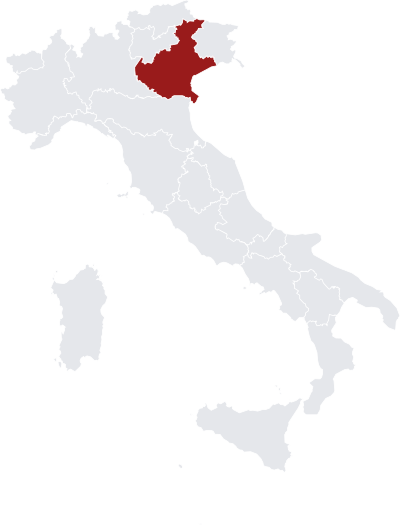
Stretching from Lake Garda and the foothills of the Dolomites to the Venetian lagoon, Veneto makes roughly a fifth of all Italian wine. Much of it is easy-drinking Prosecco and Pinot Grigio, but the region also produces some of Italy's most distinctive wines: dried-grape reds like Amarone, volcanic whites like Soave Classico, and long-lived sweet wines that date back to Roman times. Most of the best wines come from the hills, while the plains supply everyday bottles.
Veneto Wines at a Glance
| Wine | Style | Main grapes | Where | Price |
|---|---|---|---|---|
| Prosecco | Sparkling, fresh | Glera | Treviso hills and plains | $ |
| Conegliano Valdobbiadene Prosecco Superiore | Sparkling, finer | Glera | Treviso hills | $–$$ |
| Valpolicella | Light to medium red | Corvina, Rondinella | North of Verona | $ |
| Valpolicella Ripasso | Medium to full red | Corvina, Corvinone, Rondinella | North of Verona | $–$$ |
| Amarone della Valpolicella | Full, dry red from dried grapes | Corvina, Corvinone, Rondinella | North of Verona | $$$ |
| Recioto della Valpolicella | Sweet red | Corvina, Rondinella | North of Verona | $$–$$$ |
| Soave | Dry white | Garganega | East of Verona | $–$$ |
| Bardolino and Chiaretto | Light red and rosé | Corvina, Rondinella | Lake Garda | $ |
| Lugana | Dry white | Turbiana | Lake Garda | $–$$ |
| Pinot Grigio delle Venezie | Light white | Pinot Grigio | Across the region | $ |
| Piave Raboso | Tannic red | Raboso | Treviso and Venice plains | $–$$ |
Price guide for typical US retail: $ under $20, $$ $20–40, $$$ over $40.
Prosecco
Prosecco is Veneto's most famous wine and Italy's best-selling sparkling wine. It is made mostly from the Glera grape by the tank (Charmat) method, which keeps the aromas of green apple, pear, white flowers and citrus fresh and bright.
- Prosecco DOC covers a wide area of Veneto and Friuli. These are the everyday, good-value bottles, including Prosecco Rosé, which adds a small share of Pinot Nero.
- Conegliano Valdobbiadene Prosecco Superiore DOCG comes from the steep hills between the two towns, a UNESCO World Heritage landscape since 2019. The wines are finer and more precise. Look for Rive on the label, which indicates grapes from a single village or hamlet.
- Valdobbiadene Superiore di Cartizze DOCG is a tiny, celebrated hillside with its own sub-denomination, usually made in a softer, slightly sweeter style.
- Asolo Prosecco Superiore DOCG is the other hillside DOCG, on the Montello and Asolo hills.
Prosecco labels follow a sweetness scale that surprises many buyers: Brut is the driest common style, Extra Dry is slightly sweeter, and Dry is sweeter still. See our best Prosecco wines and Prosecco vs Champagne.
Valpolicella and Amarone
The hills north of Verona produce Veneto's great red wines, all from the same native grapes: Corvina, Corvinone and Rondinella, sometimes with Molinara or Oseleta. The historic heart of the area is the Classico zone around Fumane, Marano, Negrar, San Pietro in Cariano and Sant'Ambrogio. Four wines come from the same vineyards:
- Valpolicella DOC: a fresh, light-to-medium red with cherry fruit, best young and lightly chilled. Superiore versions are aged at least a year.
- Valpolicella Ripasso DOC: Valpolicella refermented on the dried-grape skins left over from Amarone, which adds body, dried fruit and spice. Often called "baby Amarone", it's one of the best values in Italian red wine.
- Amarone della Valpolicella DOCG: made from grapes dried for three to four months in airy lofts (appassimento), then fermented dry. The result is a powerful red of at least 14% alcohol, with raisin, dried cherry, chocolate and spice, aged at least two years before release.
- Recioto della Valpolicella DOCG: the original, sweet version of the same dried-grape wine, a classic with dark chocolate.
Our Amarone wine guide and best Amarone wines cover the style in depth.
Soave
East of Verona, the hills around the walled town of Soave produce one of Italy's classic dry whites from Garganega. Basic Soave is light and simple; Soave Classico, from the volcanic and limestone hills of the historic zone, has more depth: almond, white flowers, citrus and a saline, mineral finish. Look for Soave DOC Classico, the more structured Soave Superiore DOCG, and the sweet Recioto di Soave DOCG, made from dried Garganega grapes. See our best Soave wines.
Lake Garda: Bardolino, Chiaretto, Custoza and Lugana
The eastern and southern shores of Lake Garda have a mild climate thanks to the lake, and their wines are fresh and easy to enjoy.
- Bardolino DOC: a light, fragrant red from Corvina and Rondinella, with red cherry and a peppery note. The pale Chiaretto rosé is one of Italy's best-known rosés. Bardolino Superiore DOCG is aged longer.
- Bianco di Custoza DOC: a soft, fruity white blend from the hills south of the lake.
- Lugana DOC: a creamy, citrusy white from the Turbiana grape on the southern shore, shared with Lombardy and one of the region's best-value whites.
- Garda DOC: a broader denomination covering many grape varieties around the lake.
The Rest of Veneto: Vicenza, Padua, Treviso and Venice
- Lessini Durello: crisp, high-acid sparkling wines from the Durella grape, grown in the Lessini mountains. See Lessini Durello DOC.
- Breganze: north of Vicenza, known for Torcolato, a sweet wine from dried Vespaiola grapes. See Breganze DOC.
- Colli Berici and Colli Euganei: volcanic hills south of Vicenza and Padua, making Bordeaux-style reds and the aromatic sweet Fior d'Arancio Colli Euganei DOCG from Moscato Giallo. See Colli Berici DOC and Colli Euganei DOC.
- Piave and Raboso: on the plains of Treviso and Venice, the tannic, high-acid Raboso grape makes rustic reds; Piave Malanotte DOCG is its top expression. See also Piave DOC.
- Montello and Asolo: Bordeaux-style reds from Montello - Colli Asolani DOC and Colli Asolani DOCG.
- Pinot Grigio: much of Italy's Pinot Grigio is grown on Veneto's plains, labelled Delle Venezie DOC or Veneto IGT.
Which Veneto Wine to Try First
- For a party or aperitivo: a Conegliano Valdobbiadene Prosecco Superiore Brut.
- For a weeknight red: a Valpolicella Classico or a Bardolino, served slightly cool.
- For the best value: a Valpolicella Ripasso, which gives you much of Amarone's richness at a fraction of the price.
- For a special occasion: an Amarone della Valpolicella Classico from a top producer.
- For a white with character: a Soave Classico from the volcanic hills.
- For dessert: a Recioto della Valpolicella or Recioto di Soave.
Well-known producers include Allegrini, Masi, Tommasi, Zenato, Tedeschi and Quintarelli for Valpolicella, Pieropan, Inama and Gini for Soave, and Bisol, Nino Franco and Adami for Prosecco Superiore.
Food Pairing with Veneto Wines
- Prosecco: cicchetti (Venetian bar snacks), fried seafood, prosciutto and melon.
- Soave and Custoza: risotto with vegetables, lake fish, seafood pasta and sarde in saor (sweet-and-sour sardines).
- Bardolino and Chiaretto: antipasti, salumi, grilled chicken and pizza.
- Valpolicella: pasta with meat sauce, bigoli (thick Venetian spaghetti) and polenta dishes.
- Ripasso and Amarone: risotto all'Amarone, braised beef, game, and aged Monte Veronese cheese.
- Recioto: dark chocolate and Pandoro, the Christmas cake of Verona.
Frequently Asked Questions About Veneto Wine
What type of wine is Veneto known for?
Veneto is best known for Prosecco, Italy's most popular sparkling wine, and for the red wines of Valpolicella, especially Amarone. Its classic white is Soave, and it also produces a large share of Italy's Pinot Grigio.
What is the best wine from Veneto?
Amarone della Valpolicella is generally considered Veneto's greatest wine: a rich, dry red made from dried grapes and capable of ageing for decades. Top Soave Classico and Conegliano Valdobbiadene Prosecco Superiore are the best whites and sparkling wines.
Is Veneto wine good?
Yes. Veneto makes a lot of simple, inexpensive wine, but its hillside zones produce world-class bottles. Choosing a Classico or Superiore wine, or a DOCG, is the easiest way to find the region's best.
Is Veneto known for red or white wine?
Both. By volume, white and sparkling wines (Prosecco, Pinot Grigio, Soave) dominate, but the region's most prestigious wines are the reds of Valpolicella, led by Amarone.
What is the difference between Valpolicella, Ripasso and Amarone?
All three come from the same grapes and vineyards. Valpolicella is the fresh, everyday red; Amarone is made from grapes dried for months, giving a powerful, concentrated wine; Ripasso is Valpolicella refermented on Amarone's leftover skins, sitting in between in body and price.
What is Veneto famous for besides wine?
Venice, Verona and Lake Garda, as well as Palladian villas, the Dolomites, risotto, Asiago cheese and tiramisù, which is widely credited to the Treviso area.
Explore More
- All Veneto wines and wineries, with the full list of producers and denominations
- Best Corvina wines
- Best Garganega wines
- Venice wine guide
- Italian sparkling wine guide
- Italian white wine: the 15 best grapes and styles
Sources
Production rules and official information from the consortia of the wines in this guide:
- Prosecco DOC · prosecco.wine
- Prosecco di Valdobbiadene-Conegliano DOCG · prosecco.it
- Valdobbiadene Superiore di Cartizze DOCG · cartizzepdc.com
- Asolo Prosecco Superiore DOCG · asolomontello.it
- Valpolicella DOC · consorziovalpolicella.it
- Valpolicella Ripasso DOC · consorziovalpolicella.it
- Amarone della Valpolicella DOCG · consorziovalpolicella.it
- Recioto della Valpolicella DOCG · consorziovalpolicella.it